
What To Look For In A Family Hotel Room – Diary of the Dad


A family hotel room can look lovely in the photos. Then you get there, pull out the sofa bed and realise the only way to reach the bathroom is to climb over it. By half seven the kids are asleep, the lights are off and you’re lying in bed watching a man restore a lawnmower on your phone with the sound off. A night away, in the strictest sense.

My first instinct when I’m booking a hotel is still to look at the pictures of the pool. Then I think about how much of the trip we’ll spend in the room. I’d like a bit of evening left once the kids are asleep, and I’d like us to get out in the morning without tipping three bags onto the floor to find a pair of socks.

Where Is Everyone Actually Sleeping?

“Room for four” tells you how many people can stay. The bed description tells you how much sleep those people are likely to get. A double and two singles is a different proposition from a double and a sofa bed that the kids have to share. That might be fine if they’re small. If one of them sleeps sideways and the other objects to being touched by a stray toe, it’s worth finding out how wide the sofa bed is.

I put the children’s ages in when I search and look for the bed layout on the room I’m actually booking. It’s easy to get attached to a photo with bunk beds before realising it’s a different room altogether. If you need a cot, ask whether the hotel can confirm one for your stay and where it will go. It’s also worth asking whether the sofa bed will be made up when you arrive, especially if you’ll be checking in late.

The Hour After Lights Out

I like having an hour to myself after the kids have gone to sleep. On holiday I’m happy to spend it with a cup of tea and a book, ideally sitting in a chair with a light on. That’s why I’d take a plain room with a separate sleeping area over a bigger one where the telly is at the foot of the children’s bed. A suite can be a good option, but check the floor plan. Some give you a separate bedroom and others give you a sofa a few feet from the bed.

Connecting rooms can work well with older children. Ask whether there’s an internal door between them and whether the hotel can confirm the arrangement before you book. “Adjacent” can simply mean next door, with access through the corridor. If you’re all sharing one room, a lamp you can switch on by itself and somewhere to sit once the beds are made up can make the evening a lot more pleasant.

Look At The Bathroom And The Floor Space

A walk-in shower looks great until you remember your youngest reacts to having their hair rinsed as if you’ve turned a hose on them. If a bath would make your life easier, check that your room type has one. With older kids, a bathroom door that closes properly and a mirror outside the bathroom might be more useful. Someone can get ready while someone else takes their time in the shower.

I’d also look for somewhere to leave an open suitcase and enough hooks to hang wet coats or swimming things. You can get away with living out of a bag for one night. After four nights of hunting for clean socks in the same bag as yesterday’s damp towels, a couple of drawers start to look like a luxury.

Breakfast Before Breakfast

I like a hotel breakfast, especially the bit where someone else makes it. The snag is that the children can be ready for theirs a good hour before it’s served. A kettle and a fridge mean I can have a cup of tea and get some yoghurt or fruit into them while we wait. If the listing says there’s a minibar, ask if there’s space for your own food and whether it’s suitable for keeping it chilled.

For a longer stay, it can be worth comparing a hotel room with an aparthotel or a room with a kitchenette. Being able to make toast or put together a quick tea takes the pressure off finding somewhere to eat every time someone’s hungry. Check what the kitchenette actually includes. A microwave and a sink are useful, but they’ll only get you so far if you were planning to cook pasta.

How Far Is It From The Lift?

Hotel elevator with family

I’d happily take the room by the lift if I had a pushchair and bags to carry. With a light sleeper, I’d ask for one a little further down the corridor, away from everyone coming back from dinner. If the hotel has a bar or hosts weddings, ask where the bedrooms are in relation to the function rooms. For a summer stay, check how the room is cooled, particularly if you’d need to keep the windows closed because of street noise.

Then think about the journey from the car or reception. A lift is helpful only if it gets you where you need to go. If you’re bringing a pushchair or need step-free access, ask about the whole route to the room. A short flight of stairs at the far end can make every trip in and out more awkward.

Compare The Price For The Whole Stay

Before you pick the cheapest room, check what you’ll pay for parking, breakfast and any extra bed you need. Compare the totals for the same dates and the same number of guests. If breakfast is included, check whether that covers the children and what time it starts. On a trip with an early ferry or a child who wakes up ready for breakfast immediately, the timing can matter as much as the price.

There’s usually one detail I’d pay a bit more to get right. On a one-night stop, it might be separate beds for the kids. For a week away, I’d put more value on having somewhere to sit after they’ve gone to sleep. Once I’ve worked out which of those things matters for this trip, the booking gets a lot easier. And if two rooms do the job for the same price, I’m straight back to the pictures of the pool.



Source link

5 Dad Projects to Complete Before Winter Arrives – Diary of the Dad


December, January and February are generally rainy and windy in the United Kingdom. Heavy snowfall is even a perennial concern in the northern regions. Get your hands dirty with these five projects to weatherise your house before winter rolls around.

1. Cleaning the Gutters

Vladimir Srajber via Pexels

Emptying gutters during some of the wettest months reduces the risk of structural damage to your property. Clogs cause rainwater to go where it shouldn’t, leaving slippery outdoor surfaces and drowning or uprooting garden plants. Even robust gutter systems can collapse under the weight of standing water, which can be costly and a hassle to repair.

Moreover, organic material often fills the gutter trough. Twigs, leaves, clumps of moss and even living plants can slow drainage and hinder evaporation, creating ideal conditions for mould growth. Colonies release spores into the air, which can get inside your house. Prolonged exposure to mould in a space with inadequate ventilation may lead to respiratory issues or trigger allergic reactions.

Prewinter gutter cleaning promotes pest control. Insects, birds and small mammals can take shelter in debris-filled gutter troughs, and these unwanted guests may eventually find their way in.

2. Trimming Garden Trees

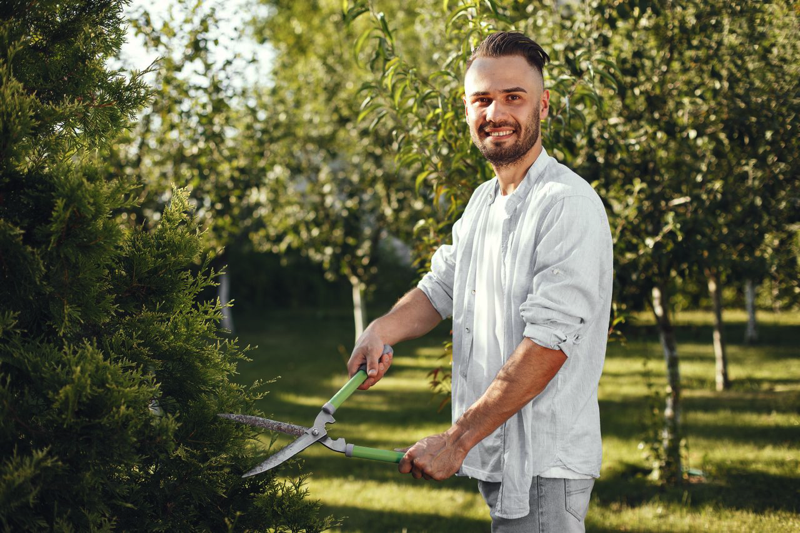
Man trimming trees in garden
Gustavo Fring via Pexels

Tall deciduous trees are a hazard during violent windstorms. Gales can blow off branches and weaker limbs, damaging whatever they land on. If your garden trees are too close to your property, they can brush against the sides and bruise masonry.

Shortening the side branches of shade trees on your own is permissible, provided that you observe safety rules. The Royal Horticultural Society recommends pruning them when dormant, unless they’re prone to silver leaf.

Doing this project in the autumn helps lower the risk of infection, as many fungi, bacteria and insects are less active during the cold season. Trimming around this time of year is a good opportunity to remove diseased or damaged wood, which promotes healthier growth.

Be mindful of tree protection orders (TPOs). These legal restrictions can apply to garden trees with historic value to the area. Verify with the local authorities if the trees you plan to trim have TPOs. If they do, submit a tree works application to your local planning authority and obtain written consent before doing anything.

3. Burstproofing Exterior Pipes

Home exterior pipes

Uninsulated pipes with trapped water exposed to the weather can burst during cold snaps. Draining them is important to keep your plumbing fixtures intact throughout the winter.

Some homes have outside taps or bib taps. A bib tap’s corresponding isolation valve is generally indoors. It’s often along the interior pipe connected to the cold water line, which leads to the garden tap, or right next to the main stopcock. The actual location varies, depending on the plumbing system design, but you can almost always find the isolation valve under the kitchen sink.

After shutting off the isolation valve, open the outside tap. Let the water out completely to drain the pipe, then leave the outside tap open. Keep the isolation valve off throughout the cold season.

4. Insulating the Garage Door

Exterior garage door
Gül Işık via Pexels

Attached garage doors are thermal bridges, causing heat to escape to the outside. Metal panels, in particular, are excellent conductors.

If you use your garage other than parking and include it in your house’s central heating, uninsulated steel or aluminium garage doors can be the biggest source of energy loss in this space. It causes your boiler to use more natural gas to keep you comfortable, which drives up your utility bills.

The good news is that you can increase your garage’s insulation value over the weekend with basic tools, such as measuring tape and a utility knife, plus foam boards. The key is to measure the surface area accurately and cut the boards precisely to cover the entire area without gaps. Prep work is vital for adhesion, so clean the door surfaces thoroughly to help the material stick during and after installation.

5. Sealing Draughty Windows

Exterior home windows
Barnabas Davoti via Pexels

Leaky windows are an energy drain, especially in the winter. The gaps around the panels cause heated indoor air to escape the room and let in cold draughts.

Applying self-adhesive foam strips can seal windows, except for units with sliding sashes where brush strips work better. For gaps around fixed design elements, such as those between the frame and the wall, use caulk or silicone sealant. If you have single-pane units, taping clear window film around the border can prevent leaky glass from wasting energy.

Remove dirt, dust or grease from window surfaces with soapy water or rubbing alcohol. Strip away the cracked, old sealant before installing fresh material to ensure proper adhesion, prevent trapping moisture and mould and avoid a lumpy appearance.

Ready Your Home for the Winter

Weatherising your house can be exhausting, but the workload becomes more manageable if you start early. Prioritise these five projects to ensure they’re meaningfully winter-ready, so you can spend your time and energy wisely.


Source link

Teaching Kids to Cook: When and How for Every Age – Diary of the Dad


I love spending time in the kitchen, and I’ve found that cooking with my children is one of the most rewarding experiences we can share. Not only does it provide quality bonding time, but it also equips them with essential life skills and builds a healthy relationship with food.

But when is the right time to start, and how should you approach it at different ages?

Let me share my experiences and insights on teaching kids to cook, from toddlers to teenagers.

The Benefits of Cooking with Children

Before we dive into the specifics of each age group, it’s worth highlighting why cooking with kids is so valuable. For starters, it’s a fantastic way to spend quality time together. In our busy lives, the kitchen can become a hub of family interaction, laughter, and learning.

Cooking also helps develop a range of skills:

  • Math skills: Measuring ingredients, adjusting recipes, and understanding proportions all involve practical maths.
  • Reading skills: Following recipes enhances comprehension and sequencing abilities.
  • Fine motor skills: Tasks like stirring, pouring, and cutting improve dexterity.
  • Science understanding: Observing how ingredients change and interact introduces basic scientific concepts.
  • Creativity: Experimenting with flavours and presentation encourages artistic expression.

Moreover, involving children in meal preparation often makes them more willing to try new foods. It gives them a sense of ownership and pride in the meal, which can be particularly helpful with picky eaters.

Cooking with Toddlers (Ages 2-3)

You might think toddlers are too young for kitchen activities, but I’ve found that even at this age, they can get involved in simple ways. The key is to focus on tasks that are safe, engaging, and mess-friendly.

Safe Kitchen Activities for Toddlers:

  1. Washing fruits and vegetables: This simple task teaches them about food hygiene and gives them a tactile experience with different produce.
  2. Stirring and mixing: Provide a large bowl and a wooden spoon, and let them mix dry ingredients or help stir cake batter.
  3. Pouring pre-measured ingredients: This helps develop their motor skills and gives them a sense of contribution.
  4. Sprinkling and decorating: Whether it’s adding cheese to a pizza or sprinkles to biscuits, this is a fun and easy task for little hands.

Toddler-Friendly Recipe Idea: Fruit Yoghurt Parfait

Let your toddler layer yoghurt and pre-cut fruit in a clear glass. They can choose the fruits and create their own colourful masterpiece. It’s a simple, no-cook recipe that introduces them to assembling dishes.

Preschoolers in the Kitchen (Ages 4-5)

As children enter preschool age, their abilities and interest in helping often grow. This is a great time to introduce more involved tasks while still prioritising safety.

Kitchen Activities for Preschoolers:

  1. Measuring dry ingredients: Using measuring cups and spoons helps develop their understanding of quantities. If the recipe is in grams, you can use an online calculator to convert it into cups.
  2. Kneading and shaping dough: This is excellent for developing hand strength and coordination.
  3. Cutting soft foods: With a child-safe knife, they can cut things like bananas or cooked vegetables.
  4. Cracking eggs: This takes practice but is a skill they’ll use often in cooking.
  5. Setting the table: This teaches them about meal preparation beyond just cooking.

Preschooler-Friendly Recipe Idea: Homemade Pizza

Let your preschooler help knead the dough, spread the sauce, and add toppings to create their own personal pizza. It’s a fun, hands-on meal that they’ll be proud to share with the family.

Early Primary School Years (Ages 6-8)

At this age, children can start to take on more responsibility in the kitchen. They’re developing better motor skills and can follow simple instructions more easily.

Kitchen Activities for Early Primary School Children:

  1. Reading simple recipes: This reinforces their reading skills and teaches them to follow instructions.
  2. Using a peeler: Under supervision, they can peel carrots or potatoes.
  3. Grating cheese: Teach them to be careful with their fingers when using a box grater.
  4. Making sandwiches: This is a great way to encourage creativity with flavour combinations.
  5. Using the microwave: With proper instruction on safety, they can reheat or cook simple items.

Early Primary School Recipe Idea: Homemade Granola Bars

This no-bake recipe involves measuring, mixing, and shaping. It’s a great way to teach about healthy snacks and let them customise with their favourite nuts or dried fruits.

Later Primary School Years (Ages 9-11)

As children approach their teenage years, they can handle more complex tasks and might even enjoy taking charge of preparing entire dishes.

Kitchen Activities for Older Primary School Children:

  1. Using the hob: With close supervision, they can start learning to cook pasta or scramble eggs.
  2. Chopping vegetables: Introduce proper knife skills with appropriate knives.
  3. Following more complex recipes: This helps develop their planning and organisational skills.
  4. Learning about food safety: Teach them about cross-contamination, proper food storage, and the importance of cooking meats thoroughly.
  5. Meal planning: Involve them in planning family meals for the week.

Later Primary School Recipe Idea: Homemade Soup

Let them choose the vegetables, chop them (with supervision), and simmer the soup. This teaches them about flavour combinations and the patience required in cooking.

Cooking with Teenagers (Ages 12+)

Cooking with teenagers

By the teenage years, many children are ready to take on significant responsibility in the kitchen. This is a crucial time to reinforce cooking skills they’ll need as adults.

Kitchen Activities for Teenagers:

  1. Preparing full meals: Encourage them to plan and cook dinner for the family once a week.
  2. Baking: More complex baking projects teach precision and patience.
  3. Experimenting with recipes: Encourage them to modify recipes or create their own dishes.
  4. Learning about nutrition: Discuss balanced meals and reading nutrition labels.
  5. Budgeting and grocery shopping: Involve them in meal budgeting and smart shopping.

Teenager-Friendly Recipe Idea: Stir-Fry

This versatile dish allows teens to experiment with different proteins, vegetables, and sauces. It teaches them about timing in cooking and balancing flavours.

Kitchen Safety Rules for All Ages

Regardless of age, safety should always be the top priority when cooking with kids. Here are some general rules I always enforce:

  1. Wash hands thoroughly before starting and after handling raw meats.
  2. Supervise all activities, especially those involving heat or sharp objects.
  3. Teach proper handling of knives and other potentially dangerous utensils.
  4. Keep pot handles turned inward on the hob to prevent accidental spills.
  5. Discuss fire safety and what to do in case of a kitchen fire.
  6. Encourage cleaning as you go to maintain a safe, uncluttered workspace.

A Recipe for Family Bonding

Teaching kids to cook is about so much more than just preparing meals. It’s about spending time together, building confidence, and letting your kids enjoy themselves. So don’t make it a chore – let them experiment, make mess, try again.

From toddlers “helping” to stir the batter to teenagers confidently whipping up family dinners, every stage offers unique opportunities for learning and bonding.

So, don’t wait for the perfect moment – your kitchen is ready for little helpers at any age. Start small, be consistent, and watch as your children develop skills and confidence that will serve them well beyond the kitchen.


Source link

Should Teenagers Pay Rent Once They Start Working? – Diary of the Dad


The first proper wage packet can make a teenager feel rich. After years of relying on pocket money and birthday cash, they suddenly have money arriving every month that feels entirely their own.

From a parent’s point of view, things may look slightly different. The food bill has not disappeared, nor have the electricity, heating, broadband or the many other costs involved in having another adult-sized person living in the house. That is usually when the question comes up: should teenagers pay rent once they start working?

There is no single correct answer. Some families genuinely need the financial help. Others can manage without it but want their children to understand that earning money also means taking responsibility for living costs. Some parents would rather let their teenager save as much as possible while they still can.

All of those approaches can be reasonable. If you decide to charge rent, the important thing is to make the arrangement fair, affordable and clear.

When Should a Teenager Start Paying Rent?

I would not charge a teenager rent simply because they have taken on a Saturday job or found temporary work during the summer holidays. If they are still at school or college and earning a relatively small amount, that money is usually better used to give them some independence and help them learn how to manage it.

The situation changes when they leave full-time education and begin earning a regular wage. At that point, asking them to contribute towards the household seems perfectly reasonable.

They are still your child, of course, and charging rent does not mean treating them like a commercial tenant. It simply introduces the idea that adults who earn money normally contribute towards the cost of the home in which they live.

How Much Should They Pay?

There is no official amount, so the fairest method is usually to base the payment on what they earn. Charging one fixed figure can become unfair if their hours or income vary.

Somewhere between 10% and 20% of take-home pay is a sensible starting point for many families. A teenager bringing home £1,000 a month might therefore pay between £100 and £200 in rent.

That still leaves them with far more disposable income than they are likely to have once they move out, but it gets them used to the idea that part of every wage is already spoken for. It also encourages them to budget around what remains rather than spending first and dealing with commitments later.

The right amount depends on why you are charging it. If the household genuinely needs help with food and bills, the figure may need to sit towards the higher end. If the main aim is to teach financial responsibility, a smaller contribution may be enough.

I would avoid charging so much that your teenager cannot save, learn to drive or work towards moving out. The point should be to prepare them for independence, not make independence harder to achieve.

Be Clear About What the Rent Covers

Teenagers are more likely to see the arrangement as fair if they know what they are paying for. Explain whether the rent includes food, electricity, heating, broadband, laundry and lifts to work. Make it clear which costs they will now be expected to cover themselves, such as clothes, phone bills, meals out or toiletries.

This does not need to become an itemised invoice every month. It is simply about showing them that running a home costs money, even when there is no landlord involved.

It is also worth agreeing what happens if their income changes. Someone on a zero-hours contract should not be expected to pay the same during a quiet month as they would when working full-time. A percentage-based arrangement makes this easier.

How to Talk to Your Teen About Rent

Dad Teen Talking

The conversation should happen before the first payment is due, not after an argument about how they have spent their wages. Announcing that they now owe rent because they have just bought expensive trainers will make it feel like a punishment.

Choose a calm moment and explain your reasons honestly. If the family needs the money, say so without making them feel responsible for solving every financial problem in the house. If the aim is to teach them how adult finances work, explain that too.

You could say: “Now that you are working regularly, we think it is fair that you contribute towards living at home. We are not trying to take all your money, but we do want you to get used to paying something each month before deciding what you can spend.”

Give them the chance to ask questions and discuss the amount. They may not be delighted, but they should understand how the decision was reached.

It also helps to agree a regular payment date, ideally shortly after payday. Treating rent like any other monthly commitment teaches a more useful lesson than asking for random amounts whenever the household is short.

Should You Save the Rent for Them?

Some parents charge rent but quietly put the money into savings, intending to return it when their child moves out or buys a home. It can be a generous way to build a useful lump sum while still teaching the habit of making monthly payments.

However, there is nothing wrong with using the money towards genuine household costs. Your teenager is eating the food, using the heating and benefiting from the broadband. Their contribution does not have to sit untouched in a savings account to be fair.

A Fair Step Towards Adulthood

Charging a working teenager rent is a personal decision, and different families will reach different conclusions. What matters is that it is not introduced out of anger, used to control their spending or set at a level that prevents them from moving forward.

A fair amount, clearly explained and adjusted when their circumstances change, can teach valuable lessons about budgeting, household costs and financial responsibility.

They may not thank you when the first payment leaves their account. That is probably good preparation for the real world too.


Source link

Taking My Child Charity Shopping Without Turning It Into a Lecture About Money – Diary of the Dad


You’re out charity shopping with your kid when you spot a vintage board game for £3. Before you know it, you launch into a 20-minute speech about inflation, depreciation and why “money doesn’t grow on trees.” Meanwhile, your child is eyeing the door. It’s the classic British dad dilemma where you want to embrace snagging pre-loved treasures from nonprofit shops without sounding like an austerity-era headmaster lecturing on frugality. Ditch the sermon to frame these trips as exciting treasure hunts.

Swap the Lecture for a High Street Bargain Hunt

Instead of explaining your abstract concept of asset depreciation, challenge your child to unearth the coolest toy on the shelf for a set price. This provides a real-world teaching opportunity, helping your child learn about the value of money. Let’s be honest, no child ever fell in love with budgeting after enduring a 30-minute lecture on compound interest outside the Oxfam entrance. If you want money lessons to stick, reframe your local high street charity shop as an uncharted cavern of curiosities.

Between retro PlayStation games, dog-eared classic paperbacks, rogue tubs of Lego and delightfully quirky knitwear, these shops are tailor-made for hands-on discovery. Children may tune out passive advice, but tend to come alive when assigned the lead explorer role in a shopping quest. By gamifying the shelves, you turn abstract price tags into tangible choices. They learn to evaluate value and spot hidden qualities for themselves, building lifelong financial smarts while having an absolute blast with dad on a Saturday morning.

Set a Fixed Budget and Give Up Total Control

Hand your child a crisp £5 note for the day’s shopping, and tell them that once it’s spent, they’re done. This shifts accountability into their hands. The secret lies in relinquishing control, which can be tough if you’re used to calling the shots. Handing over physical cash makes trade-offs tangible. At the till, take a step back. Let your child count the coins, pay the volunteer and collect their change.

Resist the urge to veto bizarre finds. If they insist that their life requires a slightly scuffed plastic dinosaur or an odd ceramic mug, bite your tongue. Experiencing buyer’s remorse over a £1.50 trinket is a cheap life lesson. Instead of nagging, you’re letting your kid discover firsthand that choosing one item means letting another go.

Weighing Wants vs Needs

If you want to explore the difference between the fleeting impulses, genuine needs and true value of the shopping experience with your kid, charity shop aisles make brilliant arenas. When your kid spots a £5 branded jacket that retails for £40, the reality of markups will hit home. Yet temptation still strikes fast when desired items beckon at pocket-money prices.

If your child is torn between buying three impulse knickknacks today and holding out for a new bike, sitting down together with a savings plan calculator can show them how setting aside a few pounds each week can turn a dream into reality. Rather than playing the grumpy dad barking out a flat “no,” you’re reframing the dilemma around their own ambitions. Instead of lecturing them on deprivation, you’re simply giving the child the practical tools and agency to trade short-term clutter for major-purchase savings.

Sustainable Benefits of Second-Hand Bargains

You don’t need to launch into an apocalyptic sermon on melting ice caps by the coat racks to raise an eco-conscious kid. Children respond to upbeat, common-sense messaging. Chat about how choosing a pre-loved item means one fewer item in the landfill. This shows them that smart financial choices naturally align with meaningful and sustainable everyday purchases.

Explain that every time your child rescues a wooden puzzle or retro fleece, they snub throwaway fast fashion and cheap plastic manufacturing to make the world a better place. Going green is less about deprivation or guilt and more about appreciating well-made things. To build on that mindset at home, make mindful reuse normal. When children realise that stretching their pocket money protects the planet, they’ll wear that thrifted jacket like a badge of honour.

Celebrating the Win-Win of Community, Charity and Change

Mural outside a charity shop window
Credit: X4leem Visuals / Shutterstock

The final triumph of a charity shop run happens right there at the counter, where sharp bargaining meets genuine community goodwill. Whether you’re browsing Barnardo’s, Cancer Research UK or Shelter, every purchase makes a difference. As the volunteer rings up the RSPCA till, remind your child they’ve bagged a bargain comic book for their £1, but that same pound is also helping to feed rescue dogs at the shelter. Charity spending transforms pocket money from selfish hoarding into a force for creating positive change.

You don’t need to lay on any heavy guilt, as kids naturally appreciate kindness when understanding that their loose change supports a charity that funds hospice nurses or warm shelter beds. By knowing how charity shops work, you can highlight the ultimate triple win where your kid scores a coveted prize, the environment gets a breather and community causes receive direct funding. It’s practical financial education with an honest heart.

Raising Grounded Kids One High Street Haul at a Time

Ultimately, charity shopping should be a tactile training ground where your child experiences genuine financial autonomy, embraces sustainable living habits and practices mindful spending. It’s not the place to groom a miniature chartered accountant who audits your coffee receipts, but about raising a grounded, confident kid who truly knows the difference between cost, value and fun. So grab that extra fiver, hit your local High Street and enjoy the adventure together.


Source link

Is Rugby Dangerous for Kids? A Realistic Guide to the Risks – Diary of the Dad


When your child announces they want to play rugby, it’s perfectly possible to feel pleased and worried at the same time. Fresh air, teammates and something to do that doesn’t involve a screen? Lovely. Watching them get tackled? Slightly less relaxing.

As a dad who coaches under-7s rugby, I’m certainly not going to tell you the sport has nothing to offer. But “it never did me any harm” isn’t a safety policy, either.

The honest answer is that tackle rugby carries a real risk of injury, including concussion. Non-contact versions remove deliberate tackling, although falls and accidental collisions can still happen. Your child’s age, the format they play and how sessions are run all matter.

Start With the Rugby They’ll Actually Be Playing

Watching international rugby won’t tell you much about a six-year-old’s first session. Children aren’t simply handed a smaller shirt and invited to recreate the Six Nations.

In England’s rugby union pathway, under-7s and under-8s play non-contact rugby. Tackling is introduced at under-9 level, with other elements added as players progress.

Those are English rugby union rules: rugby league and other countries have their own pathways. Ask the club what your child’s age group actually does, rather than relying on the word “rugby”.

Tag and touch formats let children practise running, passing, finding space and working together without bringing opponents to the ground. They’re worth considering in their own right, not just as something children must eventually “graduate” from.

Starting with non-contact rugby also doesn’t commit your family to tackling later. You can revisit that decision when the time comes.

What Are the Main Injury Risks?

Bruises, sprains, fractures and head injuries can occur in rugby. Once tackling enters the picture, contact becomes an important part of the risk.

A study published in 2024 followed boys’ teams at 35 English schools over three seasons. Contact events accounted for 87% of injuries with a known cause, and tackles were the leading injury event. Concussion was the most common injury type across the under-13, under-15 and under-18 groups.

That deserves attention. However, these were schoolboy tackle matches, using data collected between 2017 and 2020. The findings don’t tell us the injury risk for a seven-year-old playing tag, or provide an exact prediction for your child.

They do explain why “all sports have risks” isn’t a complete answer. It’s true, but the type of risk matters. Better coaching and sensible rules can help manage rugby’s dangers; they cannot make collisions harmless.

Concussion Is the Bit Every Parent Should Understand

KONSTANTIN_SHISHKIN / Shutterstock

Concussion is a brain injury. A child doesn’t need to be knocked unconscious to have one, and a blow to the body can cause it if the head moves suddenly.

Signs can include headache, dizziness, confusion, memory problems and poor balance. Symptoms may also appear later, so seeming fine immediately afterwards doesn’t settle the matter.

If concussion is suspected, the child must stop playing immediately and must not return that day. Arrange assessment by an appropriate healthcare professional; NHS 111 can advise if you’re unsure where to go. Don’t wait for routine advice if there are emergency symptoms.

Call 999 if, after a head injury, they cannot stay awake, have a seizure, develop weakness or have difficulty walking or speaking. Repeated vomiting or a worsening headache also needs urgent medical attention.

Returning to rugby should follow medical advice and the sport’s graduated return programme. In English community rugby, return to matches is no earlier than day 21, and only after the required recovery stages and symptom criteria are met. It isn’t automatic clearance when the calendar reaches three weeks.

Tell school and any other sports clubs, too. Missing rugby while playing football the following morning rather defeats the point.

The longer-term effects of repeated head impacts are another legitimate concern. We shouldn’t promise parents that childhood contact rugby has no lasting risks, or pretend we can predict an individual child’s future from one knock.

Look Closely at the Club’s Approach

Before signing up, I’d watch a session and talk to the coach. Not to conduct an interrogation worthy of a police drama, but to understand who’s looking after your child.

Useful questions include:

  • What training have coaches completed for this age group?
  • How do you introduce contact and assess whether children are ready?
  • How do you manage differences in size, experience and confidence?
  • Who provides first aid, and what happens after a suspected concussion?
  • How do you record injuries and communicate with parents?

The answers matter, but so does what you see. Are instructions clear? Are unsafe tackles stopped? Can a nervous child take a step back without being embarrassed?

I’d be reassured by a coach who takes concerns seriously. I’d be much less comfortable with anyone whose response to an injured child is essentially “toughen up”.

Check the Kit, but Don’t Expect Armour

Girls Rugby Team

A properly fitted mouthguard helps protect teeth and surrounding soft tissues. Suitable boots and well-maintained equipment matter, too.

Scrum caps can protect against cuts and injuries to the ears, but they have not been shown to prevent concussion. Buying one doesn’t turn your child into a miniature crash-test vehicle with improved safety ratings.

Equipment supports sensible coaching and injury management. It cannot replace them.

So, Should You Let Your Child Play?

I wouldn’t make the decision from a frightening headline, but I wouldn’t dismiss a genuine concern because rugby is a sport I enjoy.

There’s plenty to value: learning skills, making friends, being active and contributing to a team. Those opportunities are available through non-contact rugby and other sports as well.

Ask your child what they enjoy and what worries them. A child who loves passing and running but dislikes tackling hasn’t failed some character test. Choosing touch rugby, taking a break or finding another activity is perfectly reasonable.

If they want to play tackle rugby, understand the risks, check the coaching and insist that injuries are taken seriously. If they have previous concussions or relevant medical problems, discuss participation with their clinician.

Our job isn’t to raise children who never take a risk. It’s to help them find things they love while making informed decisions about the risks they take.


Source link

The Hidden Cost of the Morning School Run: How School Anxiety Is Impacting Dads – Diary of the Dad


If you are a dad, you already know that the morning school run is an extreme sport that requires the logistical precision of a military operation. Between locating inexplicably missing shoes, attempting to make presentable toast, mediating sibling arguments over who gets to sit in the front seat, and trying to get everyone out of the front door before the bell rings, it is usually the most chaotic part of the day. We laugh about it, we bond over it with other parents, and we accept it as a standard rite of passage in modern fatherhood.

But for a growing number of families, that morning reluctance goes far beyond standard grumpiness or a desire to sleep in. When a child is dealing with genuine school anxiety, emotionally based school avoidance, or severe neurodivergent burnout, the morning routine becomes a deeply distressing, heart-wrenching daily battle. And while society rightly focuses on the child’s wellbeing and frequently discusses the immense, crushing mental load carried by mothers, the profound impact this specific crisis has on fathers is rarely talked about.

Dads on the Frontline of the Morning Battle

When a child is struggling to attend school, it sends massive shockwaves through the entire family unit. We are conditioned to view school refusal as a temporary blip or a disciplinary issue, but the reality is a sprawling systemic failure. Recent research commissioned by Minerva Virtual Academy (MVA) surveyed 2,000 UK parents navigating these exact challenges, and the findings shine a harsh light on just how much dads are silently taking on behind closed doors.

As fathers, our biological and societal instinct is usually to try and fix things. We want to solve the problem, smooth the path, and protect our children from distress. But when faced with complex, deeply rooted issues like severe anxiety, autism, ADHD, bullying, or unmet additional needs, there is no quick fix. The wait for professional support is agonisingly slow. In the research, 15% of parents surveyed were currently waiting for a formal diagnosis for their child, and an unbelievable 14% had been waiting for more than two years.

During that endless, terrifying waiting game, families still have to wake up and manage every single morning. It is no surprise that 28% of parents said weekday mornings had become the most distressing part of family life. Furthermore, more than one in five parents admitted they had cried following an unsuccessful attempt to get their child into school, and almost a quarter said the experience made them feel as though they were failing as a parent.

The Career and Financial Hit No One Talks About

What isn’t talked about enough at the school gates or in dad-focused parenting groups is how this crisis forces fathers to drastically alter their careers and financial stability. When your child is in absolute distress, suffering from panic attacks, and physically cannot be left at the school gates, someone has to be at home.

The Minerva Virtual Academy research revealed the stark, unspoken reality for working fathers:

  • More than a third of fathers surveyed said they had reduced their working hours to support their child at home.
  • Nearly one in three fathers said they had left work altogether to manage the crisis.
  • Across all the families surveyed, 42% estimated that their household had lost up to £10,000 as a result of their child’s attendance problems.

Taking a massive financial hit, stalling your career progression, and worrying about how to pay the bills while simultaneously dealing with your child’s distress and your own feelings of complete helplessness is an incredibly heavy burden to carry. It can leave dads feeling isolated, chronically stressed, and as though they are failing as both a nurturing parent and a reliable provider. Almost a quarter of parents reported physical symptoms of stress, including nausea and migraines, highlighting that this is a full-blown family health crisis.

Finding a Different Way Forward Without the Guilt

Admitting that a mainstream school setting isn’t working for your child can feel like a devastating defeat. It isn’t. It is simply recognising that the traditional, Victorian-style education system is not a one-size-fits-all model. The main hurdle for proactive dads is that the system actively hides the alternatives.

Almost 90% of families said they had not been given clear guidance about alternative education options by their schools or local authorities. When alternatives are finally discussed, the default assumption is often traditional home education. While home education works brilliantly for some, it requires parents to take on the role of a full-time teacher. If you have already had to step back from your career, taking on full-time teaching, trying to remember GCSE physics and algebra might be the last thing you have the emotional capacity or patience for.

Online Schooling

If you want your child to receive structured teaching, expert pastoral care, and regular social interaction without the overwhelming sensory and social pressures of a physical classroom, an online school is a fantastic, modern alternative. At Minerva Virtual Academy, a structured online secondary school combines learning from home with live lessons, independent study, and weekly individual mentoring.

This pathway is entirely different from expecting a parent to become the teacher. It takes the immense pressure off you, allows your child to learn at their own pace in a safe environment, and crucially, might just give you the space to get your career, your finances, and your family life back on an even keel. Seeking a different educational approach does not make you a failure as a dad; it proves you are willing to do whatever it takes to find the right environment for your child to thrive.


Source link

Bedtime Story Books Your Kids Will Love: Key Stage 1 – Diary of the Dad


There is a particular kind of optimism involved in announcing that you will read one bedtime story. You choose a book, settle down and imagine everyone will be asleep shortly afterwards.

Then your child spots another book. And remembers a question about space. And decides that the voice you gave the rabbit yesterday was better.

Still, sharing a story is a lovely part of the evening. For children aged five to seven, there is plenty to choose from, whether they want pictures on every page or a longer adventure to return to tomorrow.

I wouldn’t rush to retire the picture books just because school has started. Equally, you can read a chapter book aloud before your child is ready to tackle it alone. Bedtime doesn’t need to become an extra reading lesson.

Here are six books and series I’d put on the shortlist.

The Smeds and the Smoos – Julia Donaldson and Axel Scheffler

If your bookshelves already contain a well-thumbed copy of The Gruffalo, this is a good way to take the bedtime routine somewhere different. Into space, for a start.

The red Smeds and blue Smoos have been brought up to avoid one another. When a young Smed and Smoo fall in love, their families are thoroughly unimpressed. The story follows what happens when the younger generation questions the rules everyone else has accepted.

Donaldson’s rhymes make it a natural choice for reading aloud, while Scheffler’s alien illustrations give children plenty to examine. It has a warm message about accepting differences, wrapped up in a colourful space adventure.

I’d particularly suggest this for the younger end of Key Stage 1, or any child who still enjoys a complete picture-book story before lights out. You may want to practise the title first. Tired dads and similar-sounding alien names are a risky combination.

Rabbit and Bear – Julian Gough and Jim Field

A little toilet humour can do a remarkable amount of work when you are trying to interest a child in a book. Rabbit and Bear understands the assignment.

Start with Rabbit’s Bad Habits, in which Bear wakes early from hibernation and decides to build a snowman. Rabbit promptly wants to build a better one. An avalanche and a hungry wolf complicate matters, and having a friend suddenly looks rather useful.

There is warmth beneath the silliness, with friendship at the centre of the story. Jim Field’s illustrations also make this an inviting step beyond picture books, without confronting children with page after page of uninterrupted text.

I’d choose this series for a child who enjoys funny animal adventures. You can read a section together each evening and return to the same characters in later books. Just be prepared for the poo-related bits to receive considerably more attention than the thoughtful ones.

Isadora Moon – Harriet Muncaster

Choosing a school is complicated enough without having to decide between fairies and vampires.

That is Isadora’s problem in Isadora Moon Goes to School. Her mum is a fairy, her dad is a vampire, and she has inherited something from both. Working out where she belongs gives the magical story a concern that children may recognise, even if their own school has a fairly ordinary uniform policy.

Harriet Muncaster writes and illustrates the series, with distinctive pink-and-black artwork accompanying the chapter-book format. Oxford recommends the books for ages five to eight, making them a sensible option for this age group.

I’d start here if your child likes magic but you want something more approachable than a hefty fantasy novel. Read it aloud, share the reading, or let a confident reader take over when they fancy it. There is no requirement to hand in your bedtime-story duties as soon as they can read.

Claude – Alex T. Smith

Claude Books

Claude is a dog whose outings tend to get rather more interesting than expected. His companion is called Sir Bobblysock, which is already a promising start for a children’s book.

In Claude in the City, the pair head out while Claude’s owners, Mr and Mrs Shinyshoes, are at work. A visit involving shopping, a café and a museum takes an unexpected turn when Claude foils a robbery.

Alex T. Smith’s illustrations appear on every page, so there is plenty to look at while you read. The series is aimed at new readers, and the combination of pictures and comic adventures makes it worth considering when your child wants a longer story but still values the artwork.

I’d recommend Claude for children who enjoy absurd characters and ordinary situations going slightly sideways. There are further outings to choose from, including Claude at the Circus and Claude on Holiday. Clearly, this dog has a better social calendar than most parents.

The Owl Who Was Afraid of the Dark – Jill Tomlinson

Plop is a baby barn owl who is frightened of the dark. This is inconvenient for an owl, but a fairly understandable position from the perspective of a small child staring into an unlit bedroom.

His mum encourages him to discover what other people like about the night. Encounters involving fireworks, camping and stargazing gradually offer him a different view of darkness.

Jill Tomlinson’s story, illustrated by Paul Howard, is a gentle choice for reading together, particularly if nighttime worries have entered the bedtime conversation. Plop gets time to explore his fear, giving you something to talk about without turning the evening into a lecture about being brave.

Check which edition you pick up: there is a longer chapter-book version and an abridged picture book. I’d choose the former for an adventure spread across several bedtimes, and the latter for children who prefer more pictures and a shorter telling.

The Lion Inside – Rachel Bright and Jim Field

The Lion Inside

Some children seem happy to announce themselves to the entire room. Others would rather wait until the room has emptied.

The Lion Inside follows a small mouse who is tired of being overlooked and decides he needs to learn to roar like a lion. What he discovers is that being big and loud doesn’t mean you never feel afraid.

Rachel Bright’s rhyming text and Jim Field’s illustrations make this a strong read-aloud choice. It is a picture book about confidence and finding your voice, with an animal story to keep things moving.

I’d suggest it for children who enjoy stories about being brave, including those who are finding school or new friendships a bit daunting. You can leave the message to the mouse rather than adding a parental speech afterwards. Also, if you’re providing the lion’s voice, remember the neighbours. Enthusiasm is admirable; a full wildlife-documentary performance through the bedroom wall is less so.

Let Them Choose Tomorrow’s Story

You don’t need all six. Borrow a couple from the library, see which one gets requested again and follow your child’s interests from there.

Some evenings will suit a whole picture book. Others will suit a few pages of an ongoing adventure. I’d be guided by how tired everyone is, including the person doing the voices.

And if the favourite ends up being the same book for a fortnight, that’s fine too. Although you should probably agree on the rabbit’s voice early. Apparently, continuity matters.


Source link

How to Encourage Independence in Your Teen – Diary of the Dad


Today’s teenagers face a different set of pressures to the ones many dads remember. Recent government research found that 96% of young people use social media, while many also report feeling anxious about how others see them. At the same time, we are seeing a growing financial confidence crisis among younger generations.

Rather than protecting your teenager from every challenge, you can help them build the judgment and resilience they’ll need when they eventually leave home.

Involve Them in Household Responsibilities

Cooking a simple meal, doing laundry, food shopping and managing a weekly budget all develop planning skills and accountability.

If your teen cooks dinner once a week, for example, involve them in choosing the recipe, creating a shopping list and sticking to a spending limit. Regarding household budgeting, show them utility bills and explain how everyday decisions affect family finances.

Promote Independent Travel

Travel builds confidence, and a teenager who can get around on their own will often feel more capable in other areas of life. Start with short journeys on familiar bus or train routes and encourage them to check timetables and organise trips with friends.

If they’re approaching driving age, you could support their lessons and explain the less exciting parts, like arranging young driver insurance, road tax, MOTs and servicing.

Encourage Future Planning

Regular conversations about college, apprenticeships, university, work experience or career interests can help your teenager think about the bigger picture. Focus on exploring options rather than picking one career path, discussing things like earning potential, qualifications and day-to-day working life.

You can also suggest setting savings goals for a major purchase, connecting long-term planning with everyday choices.

Allow Safe Failures

Father and son discussing money

Failure teaches lessons that success often can’t. If your teen misses a deadline or spends their pocket money too quickly, resist the urge to rescue them immediately.

Instead, talk through what happened after the event and help them identify what they’d do differently next time. The key is making sure mistakes stay safe and manageable, not harmful.

Staying Connected

Teenagers need freedom, but they also need the reassurance that you’re available when things go wrong. Create regular opportunities to talk without turning every conversation into a check-in.

A drive, a walk or watching sport together often creates room for natural discussions, for instance. When they share a problem, listen first and avoid jumping straight into solutions.

Your role doesn’t end as your teenager becomes more independent. The goal is to raise a young adult who can stand on their own feet, while knowing you’re always there when they need support.


Source link

From Playtime to Panic: Spotting a Real Pet Emergency – Diary of the Dad


A dog collides with another at the park, yelps loudly, and is back to chasing a ball thirty seconds later. A cat leaps off a windowsill, lands awkwardly, shakes it off, and carries on as though nothing happened. Most of what looks alarming during play is exactly that: alarming to watch, but not actually serious.

The trouble is that a genuine injury can look almost identical in the first few seconds, which is why so many owners either rush to emergency vet care over something minor or, worse, wait out something that needed attention straight away.

Signs to Look Out For

The difference usually isn’t in how loud the initial reaction is. A sharp yelp followed by a full return to normal movement within a minute or two is a good sign, not a bad one; it suggests a brief, sharp discomfort rather than lasting damage. What matters far more is what happens after that first reaction fades.

A pet that’s still favouring a leg five or ten minutes later, that won’t put weight on a paw at all, or that has gone quiet and withdrawn instead of settling back into normal behaviour, is telling you something different from one that shakes off a knock and moves on.

Limping

Limping is one of the clearest examples of how this plays out. A dog that trips, yelps, and then walks it off with a slight hitch in its stride for a minute or two has probably jarred something minor. A dog that holds a paw completely off the ground, refuses to bear any weight, or is limping consistently twenty minutes later has likely done real damage, a sprain, a torn ligament, or something broken, and that’s worth having checked rather than watched overnight.

Swelling

Swelling is another useful signal, mainly because it tends to be unambiguous. A joint, paw, or muzzle that visibly puffs up after a knock or a bite from another animal isn’t something that settles on its own, and it usually points to either an injury or an allergic reaction, both of which are worth acting on the same day rather than waiting to see if it goes down by morning.

Breathing

Breathing tells you more than almost anything else. Heavy panting after a hard play session is completely normal and usually settles within ten or fifteen minutes of rest. Laboured, noisy, or open-mouthed breathing that doesn’t ease once your pet has calmed down, especially alongside pale, blue, or grey gums, is not something to wait out.

The same goes for a dog’s abdomen that looks suddenly swollen or tight after eating and playing, particularly in larger, deep-chested breeds; this can be a sign of bloat, a condition that can become life-threatening within hours and needs immediate attention rather than a wait-and-see approach.

Heat

Heat is worth watching too, particularly after an energetic play session on a warm day. Some heavy panting and a search for shade is normal. Panting that doesn’t settle after a good rest in the shade, along with drooling, wobbliness, or collapse, points to heatstroke rather than ordinary tiredness, and that’s a situation that gets worse quickly rather than resolving on its own.

Behaviour

Behaviour after the fact is worth paying attention to as well. A pet that goes quiet, hides, stops wanting to be touched, or seems unusually withdrawn in the hour after a bump or a fall is showing you something even if there’s no obvious wound. Animals are often better at masking pain than showing it plainly, so a change in demeanour, rather than an obvious injury, is sometimes the clearest signal something is actually wrong.

Time

A rough rule of thumb that works for most situations: if the reaction fades within a few minutes and your pet returns to normal movement, appetite, and behaviour, it’s reasonable to keep an eye on things at home. If a symptom, limping, swelling, laboured breathing, a swollen abdomen, or withdrawn behaviour, is still present after ten to fifteen minutes, or gets worse rather than better, that’s the point to stop watching and start acting. Waiting to see if things improve overnight is one of the most common reasons a manageable injury turns into something more serious.

Trust Your Instincts

Dog at the vet with a poorly paw

If you do decide something needs looking at, act on it rather than sitting with the uncertainty. Keep your pet as still and calm as you reasonably can on the way, support any injured limb rather than letting it bear weight, and call ahead if you can so the practice knows what to expect when you arrive. None of this requires you to diagnose anything yourself; it just means treating the decision to seek help as one you’re allowed to make on a hunch, not only once something is unmistakably wrong.

Most playtime knocks really are nothing. But the ones that aren’t tend to announce themselves quietly, through what doesn’t settle rather than through how dramatic the moment looked. Trusting that pattern, and knowing you can act on it, is what actually protects your pet when it counts.


Source link

Back to Top
Product has been added to your cart
Compare (0)