Pope Leo visits Italy’s ‘Land of Fires’ as families seek justice for children lost to toxic waste

Pope Leo visits Italy’s ‘Land of Fires’ as families seek justice for children lost to toxic waste

ACERRA – Families living in a toxic-waste polluted area around Naples were preparing to meet Pope Leo XIV during his pastoral visit on Saturday, carrying with them years of grief, anger and hopes for justice after losing children to cancer linked to a multi-billion mafia racket of dumping toxic waste.

The visit to the so-called Terra dei Fuochi, or Land of Fires, comes on the eve of the 11th anniversary of Pope Francis’ big ecological encyclical Laudato Si (Praised Be), and indicates Leo’s interest in carrying on his predecessor’s environmental agenda.

The European Court of Human Rights last year validated a generation of residents’ complaints that mafia dumping, burial and burning of toxic waste led to an increased rate of cancer and other ailments in the area of 90 municipalities around Caserta and Naples, encompassing a population of 2.9 million people.

The court found Italian authorities had known since 1988 about the toxic pollution, blamed on the Camorra crime syndicate that controls waste disposal, but failed to take necessary steps to protect residents’ lives. The binding ruling gave Italy two years to set up a database about the toxic waste and verified health risks associated with living there.

The pope will visit the city of Acerra to meet families who lost young relatives to cancer, the human cost of environmental pollution. Bishop Antonio Di Donna estimated 150 young people died in the city of some 58,000 over the past three decades.

“We very much wanted the pope to meet with them because these children and young people who have died are, to all intents and purposes, victims of environmental pollution. There is a link, a correlation between pollution and the incidence of cancer,” Di Donna said.

The victims include Maria Venturato, who died of cancer in 2016 at the age of 25. Her father Angelo said he hopes to speak with the pope to explain their reality, “not for me … for the next generation.”

“I’d like to give these young people a future, so I’m asking for the pope’s help with this. That is, I’m making a strong appeal to him to go to those in power and say, ‘Look, let’s heal this land of fires,’” he said.

Filomena Carolla plans to present the pope with a book containing memories from the life of her daughter, Tina De Angelis, who died of cancer at the age of 24.

“I’m just angry at the people who poisoned the soil, because what did our children have to do with it? What did they have to do with it, so young,” Carolla said.

Francis’ plans to visit the area in 2020 were canceled by the pandemic.

Copyright 2026 The Associated Press. All rights reserved. This material may not be published, broadcast, rewritten or redistributed without permission.


Source link

The Trump administration expands its use of AI in the hunt for healthcare fraud

The Trump administration expands its use of AI in the hunt for healthcare fraud

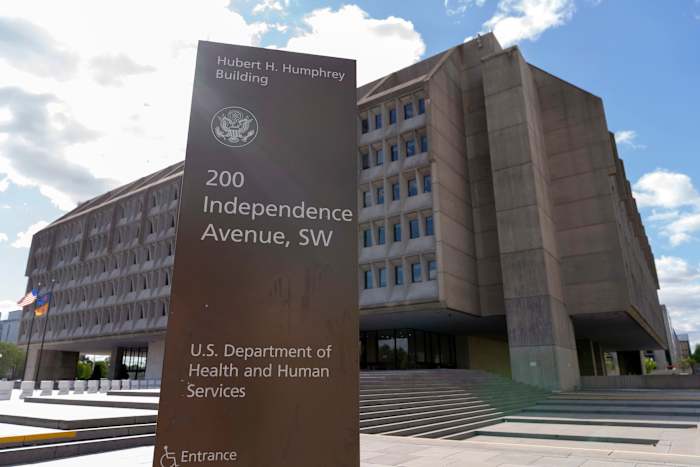
NEW YORK – The U.S. Department of Health and Human Services on Thursday announced it is supercharging its use of artificial intelligence to police how states and other recipients of federal health dollars are auditing their programs. The move is intended to tamp down risks of fraud and save the government money.

The department will use ChatGPT and other AI tools to analyze audit reports from all 50 states on an ongoing basis, said Gustav Chiarello, the assistant secretary for financial resources who is leading the new program.

“It’s classic big government: Everyone files an audit and it lands with a thud and no one does anything about it,” Chiarello said in an interview. “Here, with AI, we’re able to dig into it.”

The move builds on the department’s embrace of generative AI for investigating state Medicaid programs, automating administrative tasks and editing text. AI tools can be a powerful aid in finding patterns or problems across large documents, but critics say the government should use them with caution because they frequently make mistakes and can have unintended biases.

The Trump administration and Vice President JD Vance’s anti-fraud task force have spent recent months promoting efforts to crack down on fraud in the Medicaid and Medicare programs as well as in student loan applications and other areas. Those efforts have also involved using AI technology to flag likely fraud, Federal Trade Commission Chairman Andrew Ferguson said recently on Fox News.

States, local governments, nonprofits and higher education institutions that spend at least $1 million in federal money a year are required to submit annual audits. The new initiative will use AI to analyze those audits from HHS-funded programs, including state Medicaid programs and federal grantees in research, addiction services and more, Chiarello said.

Recipients that do not file the required reports or resolve problems in them could face a loss of funding. The initiative was first reported by The Wall Street Journal.

Critics have blasted the administration’s anti-fraud efforts, noting most have been targeted at Democratic states and at times have reflected a tendency to attack first and gather the facts later. On at least one occasion, the administration acknowledged to The Associated Press that it made a major mistake in data it had used to help justify a New York Medicaid fraud investigation.

Asked about safeguards against the AI tools making mistakes, Chiarello noted that officials were evaluating public reports rather than uncovering new information. He said the tools were intended to make grantees better stewards of federal dollars.

Rob Weissman, co-president of the consumer rights advocacy group Public Citizen, said he doesn’t think the administration is seriously concerned about fraud, and doesn’t trust it to use AI tools in a fair and nonpartisan way.

“The AI is kind of beside the point when you assess what their actual objectives are, rather than what they pretend they are,” he said.

HHS said it has sent letters to governors and treasurers in all 50 states alerting them to the new initiative.

“This letter serves as your formal notification that HHS will no longer treat chronic audit noncompliance, repeat deficiencies, material weaknesses, or delinquent audit obligations as matters that may remain unresolved through indefinite informal follow-up,” read one of the letters reviewed by the AP.

Chiarello said he has been in touch with his counterparts in other federal departments in hopes that they follow his lead.

“It would be fairly easy for the other agencies to use our technology and jump on it,” he said.

___

Associated Press writer Geoff Mulvihill in Haddonfield, New Jersey, contributed to this report.

Copyright 2026 The Associated Press. All rights reserved. This material may not be published, broadcast, rewritten or redistributed without permission.


Source link

Ugandans rue link to Bundibugyo, the Ebola virus type named after a district of cocoa farmers

Ugandans rue link to Bundibugyo, the Ebola virus type named after a district of cocoa farmers

KAMPALA – Boon-dee-BOO-joh.

Before it became the somewhat easy-to-mispronounce name of a rare type of Ebola virus, Bundibugyo is a mountainous district in western Uganda that even some locals would struggle to pinpoint on a map.

It’s home to roughly 200,000 people. Many are cocoa farmers who search for whatever cultivable land they can find in the impossibly steep landscape of hills and valleys marking Uganda’s border with Congo. As an example of the classic village idyll, Bundibugyo is a beautiful place.

Yet it now trends for an unpleasant reason, making some Ugandans rue Bundibugyo’s association with the current Ebola outbreak, which has infected hundreds of people in eastern Congo. There are 160 suspected Ebola deaths in two provinces.

Virus type discovered in 2007

The Ugandan district’s connection to the Bundibugyo virus stems from an Ebola outbreak there nearly two decades ago that was flagged as a new species of Ebola, a viral disease that usually manifests as hemorrhagic fever.

The outbreak wasn’t the Sudan virus, named for the area in present-day South Sudan where that type was first identified. It also wasn’t the type known as Zaire, as present-day Congo was known when Ebola — itself the name of a Congolese river — was first discovered in 1976.

So the November 2007 outbreak in a remote part of western Uganda came to be known as Bundibugyo, one that scientists even now haven’t studied as much. That is why Ebola specialists say it is particularly dangerous. Moreover, it was spreading in Congolese villages before health authorities there identified it as the cause of sickness in a growing number of people.

The 2007 outbreak in Bundibugyo killed at least 37 people but had been contained by the end of the year. A second outbreak of the Bundibugyo virus, also relatively small, came in 2012 in Congo’s northeast.

Initial cases in those outbreaks were identified early, allowing for a quick public health response, according to Dr. Tom Ksiazek, a University of Texas Medical Branch virologist who directed the group within the U.S. Centers for Disease Control and Prevention that first identified the Bundibugyo virus.

Ugandans upset about the name

This time, while there is no Ebola in Bundibugyo, a lingering connection to the picturesque Ugandan district is hurtful, said Ugandan government spokesman Alan Kasujja, who has urged global health authorities to clarify that Uganda isn’t the epicenter of the latest outbreak.

“Bundibugyo is too beautiful to be the name of a disease,” he said on X. “We need to take back its name from this madness.”

The World Health Organization is responsible for the taxonomic descriptions. As was seen with the global mpox outbreak — the disease’s name was changed in 2022 from monkeypox — the United Nations agency is sensitive to the use of descriptors or tags that may expose whole communities to stigmatization.

With Ebola, however, the trend has been to name viruses for the places where they were first identified.

Ugandan health authorities have experience dealing with Ebola, one reason they are adamant there is “no Ebola” in this East African country and want WHO to be more specific in its updates on the toll of the outbreak now deemed to be of global concern.

Cases in Uganda linked to Congo

Uganda has reported only two cases, both Congolese nationals who traveled to Uganda before Congo declared an outbreak on May 15. One of them, a 59-year-old man, was admitted to a hospital in Kampala, the Ugandan capital, on May 11 and died three days later.

The second person, a woman about whom local authorities have said little, is being treated at a different Kampala hospital.

This outbreak is on “the Congo side” mainly, Ugandan President Yoweri Museveni said Thursday, urging local tourism authorities to fight the perception that Ebola is spreading in Uganda.

Museveni urged Ugandans to “stop shaking hands” as part of measures to avoid infection. He also ordered the postponement of an annual religious event that attracts thousands of pilgrims, from Congo and elsewhere, who converge around a Catholic basilica just outside Kampala by June 3.

Other measures announced Thursday include the suspension of all public transportation and flights between Congo and Uganda.

Contact tracing is key

The risk stemming from cross-border commerce is high, said Dr. Emmanuel Batiibwe, who led efforts to stop an Ebola outbreak in 2022 that killed at least 55 people.

Stopping the current outbreak from spreading into Uganda will require “enhanced surveillance at all points of entry,” he said.

Uganda has had multiple Ebola outbreaks, including one in 2000 that killed more than 200 people. There was an outbreak in Kampala last year.

All available vaccines and treatments for Ebola don’t work for Bundibugyo patients. Tracing contacts and isolating them is seen as especially key to stopping the spread of this virus, in addition to getting healthcare workers proper protective equipment.

A family of fruit bats is believed to be the natural hosts of the viruses that cause Ebola, according to WHO. Ebola is spread by contact with the bodily fluids of an infected person or contaminated materials.

Copyright 2026 The Associated Press. All rights reserved. This material may not be published, broadcast, rewritten or redistributed without permission.


Source link

What to know about the Japanese-style scalp massages catching on in the US

What to know about the Japanese-style scalp massages catching on in the US

SAN FRANCISCO – Getting a scalp or face massage is often a relaxing highlight of getting a haircut or a facial. Now, head spas are popping up across the country offering deep cranial and facial relaxation.

“Typically, when you go get a massage, the focus is always like your back, and I always wish there was more on my head, on my face especially, on my neck,” says Karena Kong, a frequent customer of Nen Head Spa in San Francisco. “When I saw that they give 90 minutes of just head, face, shoulder massage, I felt like it’s a great way to just focus on the areas that I love.”

What to expect from a head spa

Head spas originated in Japan, rooted in centuries-old practices that combine massage and herbal tinctures. Modern versions began gaining popularity in Japanese salons in the 1990s before spreading throughout Asia and now the U.S.

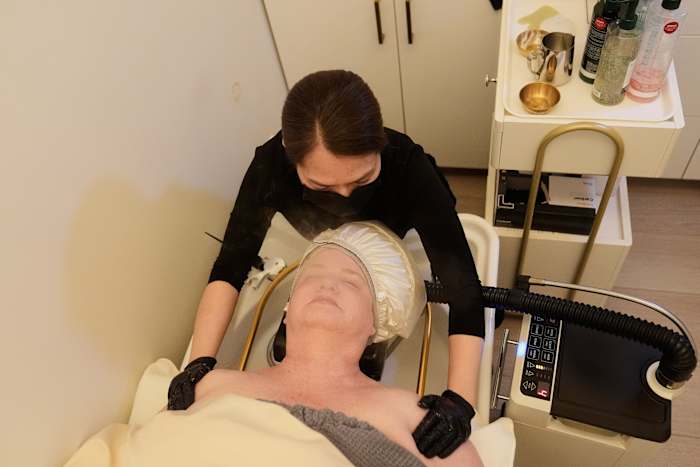
A typical session lasts 60 or 90 minutes and often begins with a scalp inspection, followed by deep cleansing, exfoliation, steam, and extended head, face and neck massage. Many services also include essential oils, conditioning masks, and aromatherapy in a quiet setting with dimmed lights and soft music.

“The core part of it is actually getting your hair washed,” said Peter Tham, owner of Nen Head Spa, where head massages cost about $100 an hour. “The feeling of getting your head washed, especially on a hot and humid day, feels really good. Combine that with, facial, scalp, neck and shoulder massages, which is kind of where most people, especially those who sit in front of a computer all day, suffer a lot of tension.”

What to make of head spa claims

Some head spas make health and medical claims about some of their services, suggesting they can offer stress relief or treatment for scalp skin conditions, hair loss or even alopecia, an autoimmune disorder. Experts caution that people with skin or hair conditions should see a dermatologist or other appropriate doctor for advice and possible treatment.

“It’s important to know and differentiate something that’s done for a health reason or relaxation from seeing a medical expert, a dermatologist, if you are having hair loss,” said Zakia Rahman, a dermatology professor at Stanford University School of Medicine.

Rahman has noticed the rising popularity of head spas and says they are generally fine as a compliment to actual medical treatments if needed — and for people who like the way it makes them feel.

Head spas can be relaxing and rejuvenating, fans say

At Sunday Headspa in San Francisco, each session starts with a technician inspecting hair follicles with a magnifying device and assessing their condition. Then customers get a deep clean, said Jolly Mac, the spa’s coordinator.

Many of their clients first discovered head spa services in Asia and are looking for similar services, which start at about $200 an hour.

Customer Crystle Vitari, first visited a head spa while visiting South Korea and finds it “rejuvenating” — and relaxing.

“Every time, I fall asleep and take a nap, actually, because it’s so relaxing,” she said.

___

Associated Press writer Olga R. Rodriguez contributed to this story.

Copyright 2026 The Associated Press. All rights reserved. This material may not be published, broadcast, rewritten or redistributed without permission.


Source link

A proposed additive ban could change New York’s pizza and bagels, some say for the better

A proposed additive ban could change New York’s pizza and bagels, some say for the better

NEW YORK – After more than a decade of mixing and kneading dough in his family’s Brooklyn pizzeria, Salvatore Lo Duca recently made a distressing discovery: A key component of their thin-crust pies, bromated flour, contained a suspected carcinogen already banned in much of the world.

So, in the back kitchen of Lo Duca Pizza, the 39-year-old began tweaking the original recipe handed down by his parents — with unexpected results.

“When we started playing around with a different flour, I actually took a liking to it,” said Lo Duco, who runs the shop with his five brothers. “It’s a little more expensive, but the quality is there.”

A looming ban on the additive, potassium bromate, may soon force thousands of pizzerias and bagel shops across New York into a similar transition.

The bill, passed by state lawmakers and awaiting Gov. Kathy Hochul’s signature, has divided dough makers, triggering fears that even a minor change to long-established baking practices could have dramatic implications for the city’s most iconic foods.

“This is an earth-shaking event for New York pizza,” said Scott Wiener, a pizza historian who leads tours of notable slice shops. “That ingredient is part of the identity of the slice.”

Employees at several stores that use bromated flour declined to comment for this story. But Wiener estimated that around 80% of pizza and bagel shops rely on a flour that contains the oxidizing agent, which reduces rest time for dough and helps ensure a stronger, chewier product.

To some, the quintessential qualities of the New York bagel — its height and structure, external crispiness and springy bite — would not be possible, or at least as ubiquitous, without the chemical shortcut.

“You could achieve that same bagel texture, but it’s a lot more work and it’s going to be a lot more expensive,” lamented Jesse Spellman, the second-generation owner of Utopia Bagels.

Ahead of the possible ban, he too has been adjusting his family recipe, experimenting with yeast concentrations and rise time.

“It’s going to take some time to get a product that we’re happy with,” Spellman said.

Others, meanwhile, see the proposed ban on potassium bromate as long overdue. The additive is already outlawed across the European Union, China, India, Canada and — as of next year — California. Some experts have theorized that its absence outside the United States could be one reason that many Americans find baked goods in Europe and elsewhere more tolerable.

“From a consumer’s point of view, there’s nothing good about potassium bromate,” said Erik Millstone, a professor of science policy at the University of Sussex focused on the health impact of chemicals in food.

Going back to the 1980s, he noted, studies have shown it can cause cancer in laboratory animals, even in “perfectly reasonable” doses.

“Most well-informed people would prioritize a long healthy life over a slightly softer and more soluble bun,” he said.

Already, many of New York’s most celebrated pizzerias, particularly newer and more artisanal-leaning shops, tout their use of “unbromated” flour.

But neighborhood slice shops still overwhelmingly rely on a General Mills flour called All Trumps, a standard ingredient since the city’s first grab-and-go pizza parlors opened nearly a century ago, according to Wiener. General Mills now sells an unbromated flour for roughly the same price, though other alternatives are costlier.

In Wiener’s view, the move away from bromated flour could ultimately improve the quality of slices across the city.

“Without such a fast turnaround for dough production, you’re going to get more well-fermented doughs, which is going to lead to lighter pizzas that are easier to eat and leave you with less of a stomachache,” he said. “It will require more of a process. But everything will be built back better.”

If the legislation passes, businesses will have a one-year grace period to continue using the additive, plus additional time to go through unexpired bags. A spokesperson for Hochul said she will review the bill.

In the meantime, the possibility of the ban has rippled beyond New York’s borders.

“Pizza in Florida is officially better than pizza in New York,” crowed Mario Mangilia, the owner of DoughBoyz in Florida in a recent Instagram post. He added that “my grandfather would haunt me” if the shop’s dough recipe were ever changed.

But after he was confronted by several prominent pizza accounts over the additive’s health concerns, Mangilia appeared to walk back his pro-bromate stance.

“I’ll tell you what,” he replied to a Long Island-based pizza owner. “I’ll test some different flour out to check it out.”

Copyright 2026 The Associated Press. All rights reserved. This material may not be published, broadcast, rewritten or redistributed without permission.


Source link

Americans exposed to hantavirus on ship enjoy some Nebraska hospitality while waiting in quarantine

Americans exposed to hantavirus on ship enjoy some Nebraska hospitality while waiting in quarantine

OMAHA, Neb. – The 18 American passengers who were exposed to hantavirus on the MV Hondius cruise ship are getting a taste of Nebraska hospitality as they wait to find out how much longer they will have to remain in quarantine at the hospital in Omaha.

Elsewhere, a 12th illness linked to the ship was confirmed Friday in the Netherlands as health officials continue to monitor hundreds of people who were potentially exposed.

The doctor who runs the National Quarantine Unit where the American passengers are being monitored said at a news conference Friday that none of them are showing any symptoms at this point, but Dr. Michael Wadman referred questions to the Centers for Disease Control and Prevention about whether these 18 people will have to remain at the specialized facility at the University of Nebraska Medical Center for the full 42-day quarantine period.

The CDC didn’t respond Friday to questions about the plan for these passengers staying in what resemble hotel rooms, complete with their own workout machines and a small refrigerator. The rooms are equipped with specialized negative-pressure ventilation and waste sterilization systems to keep germs from escaping.

Hantavirus usually spreads from rodent droppings and is not easily transmitted between people. But the Andes virus detected in the cruise ship outbreak may be able to spread between people in rare cases. Symptoms usually show between one and eight weeks after exposure. Health officials recommended the long quarantine because of the incubation period for the virus.

Passengers arrived with few belongings

Wadman said that once the passengers realized how long they were going to be staying in quarantine, they started ordering things they needed because health officials let them bring only a small plastic sack of belongings with them when they left the MV Hondius. They had to leave their luggage behind, so a steady stream of boxes started arriving at the quarantine unit after the passengers began arriving in Omaha on May 11.

In between the symptom checks twice a day, the staff at the nation’s only dedicated quarantine unit are doing their best to help the passengers pass the time with special meals featuring local food trucks and distinctive Nebraska delicacies like Runzas along with lessons on the sandhill cranes migration that brings millions of the majestic birds to the state every spring and other subjects.

The rooms also have high-speed internet connections to help the passengers connect virtually with family and friends. Jake Rosmarin said it can be lonely at times being so far away from his fiance back in Boston, but the days have mostly been flying by as he calls family and friends and makes videos for his Facebook and Instagram pages where he normally posts travel videos. Rosmarin tries to think positive and not dwell on the fact that he still faces almost another month in quarantine.

“Why am I going to harp on those negative aspects? The time’s just gonna go by slow if I kind of harp on the negatives,” he said.

Hospital staff works to make passengers comfortable

Rosmarin said he really appreciates everything the nurses and doctors from the medical center and adjoining Nebraska Medicine hospital, who volunteer to work at the quarantine unit, have done for him and the other passengers, beginning with the deliveries of his favorite Starbucks iced horchata with oat milk and vanilla cold foam.

“They’ve just been amazing. Truly. Truly, truly, truly. I think they’ve gone above and beyond with making sure that we’re comfortable here,” said Rosmarin, who ordered himself a new mattress pad and pillows along with a set of Mixtiles photos of himself and his fiance to hang on the wall to help make the room homier.

Rosmarin and a few other passengers unexpectedly got a chance to leave their rooms for a few minutes Sunday evening when Omaha was under a tornado warning, but they all wore masks and kept their distance while the medical staff had on full protective suits.

The hospital is planning to give the passengers a taste of Runza on Tuesday and a meal from Omaha Steaks on Thursday of next week. Rosmarin said he ordered a barbecue bacon Runza, which is a mix of meat, seasonings and sauce baked inside bread. The fast food chain that’s known for the sandwiches is almost exclusively in the state, but elsewhere in the country the same meal might be called a bierock.

Nebraska Gov. Jim Pillen, who owns a massive hog farm, said at Friday’s news conference that he’s hoping to arrange a pork tenderloin dinner as well, if he can be sure the hospital chefs will cook it correctly.

Quarantine will likely last roughly another month

Wadman said the passengers who remain in Omaha have all been cooperative despite the fact that the CDC issued a formal order earlier this week to prevent two of them from leaving the quarantine unit.

“I think there’s many that would really like to be home,” Wadman said, but it’s not yet clear that the CDC will allow that before the 42 days are up. Each case will be evaluated individually.

Twelve people worldwide who were aboard the MV Hondius have fallen ill, including one of the crew members that was just confirmed Friday in the Netherlands. Three people from the cruise died, including a Dutch couple that health officials believe were the first exposed to the virus while visiting South America. No deaths have been reported since May 2, according to World Health Organization Director-General Tedros Adhanom Ghebreyesus.

“We continue to urge affected countries to monitor all passengers and crew carefully for the remainder of the quarantine period. More than 600 contacts continue to be followed in 30 countries, and a small number of high risk contacts are still being located,” he said.

University of Nebraska President Jeffrey Gold said the new cases will definitely be considered as public health officials decide how long the passengers have to quarantine, but the CDC is calling the shots on that period.

“Any case, any symptoms, any positive test anywhere gives us more information about the biology of this viral illness. And it as any good scientific approach would be, it influences our decision making,” Gold said.

Copyright 2026 The Associated Press. All rights reserved. This material may not be published, broadcast, rewritten or redistributed without permission.


Source link

Legal fight could delay a proposed B settlement for lawsuits in Roundup cancer claims

Legal fight could delay a proposed $7B settlement for lawsuits in Roundup cancer claims

JEFFERSON CITY, Mo. – Delays could be in store for a proposed $7.25 billion settlement covering thousands of claims that the maker of Roundup weedkiller failed to warn people the product could cause cancer.

An attorney opposed to the settlement filed paperwork Friday to move the case to federal court instead of a Missouri court, where people face a June 4 deadline to opt out of the settlement. The dispute about who should preside over the proposed settlement could disrupt its deadlines and delay a resolution about whether it should be approved.

The legal wrangling over the settlement is playing out as the U.S. Supreme Court weighs a case that could block thousands of lawsuits filed in state courts against agrochemical-maker Bayer, which added Roundup to its portfolio when it acquired Missouri-based Monsanto in 2018. Bayer contends the state-level claims that it failed to warn of cancer risks should be forbidden because it followed federal labeling standards that don’t require a warning.

Germany-based Bayer also disputes the assertion that Roundup’s key ingredient, glyphosate, can cause non-Hodgkin lymphoma.

The Environmental Protection Agency has determined that it’s not likely to be carcinogenic to humans when used as directed. But plaintiffs point to a 2015 decision by the World Health Organization’s International Agency for Research on Cancer, which classified the chemical as “probably carcinogenic.”

The case before the Supreme Court was filed on behalf John Durnell, who says he developed non-Hodgkin lymphoma after more than 20 years of spraying Roundup on a community garden in St. Louis. Durnell is not covered by the proposed class-action settlement. But his attorney, Ashley Keller, filed objections opting out of the settlement on behalf of several other clients before also filing a document to shift the settlement case to federal court.

“This is a huge settlement that is extinguishing the rights of tens of thousands of cancer victims,” Keller said Friday. “It was rushed in to state court.”

The move to federal court is sure to face opposition.

Attorney Christopher Seeger, who is proposed as a claimants’ representative in the settlement, denounced the court shift as “a baseless delay tactic that should be promptly denied.”

A statement from Bayer said the move “has no merit,” and it would work to keep the proceedings in state court.

The proposed nationwide settlement was filed in February in St. Louis Circuit Court in Missouri. It’s designed to address most pending Roundup lawsuits, as well as any additional cases brought in the coming years by people who were exposed to Roundup. But if too many claimants opt out, Bayer reserves the right to cancel it.

A hearing on the settlement is scheduled for July 9 in state court. The Supreme Court, meanwhile, is expected to issue a decision in Durnell’s case by the end of June.

The proposed settlement calls for Bayer to make annual payments into a special fund for up to 21 years, totaling as much as $7.25 billion. The amount of money paid out to individuals would vary depending on how they used Roundup, how old they were when diagnosed and the severity of their non-Hodgkin lymphoma.

An agricultural, industrial or turf worker exposed at length to Roundup would receive an average of $165,000 if they were diagnosed with an aggressive form of the illness while younger than age 60, according to the proposed settlement. But those diagnosed at age 78 or older would get an average of $10,000.

Copyright 2026 The Associated Press. All rights reserved. This material may not be published, broadcast, rewritten or redistributed without permission.


Source link

Advocacy group sues Trump administration over access to abortion for veterans

Advocacy group sues Trump administration over access to abortion for veterans

An advocacy group has filed suit against the Trump administration over its decision to reinstate a near-ban on abortions for veterans and their family members who depend on the U.S. Department of Veterans Affairs for healthcare.

The federal lawsuit filed Thursday says the rule finalized by the VA on Dec. 31 takes away limited abortion access that was “crucial for the health, autonomy, and equality of veterans and their family members.”

Attorneys for the group Minority Veterans of America want the U.S. Court of Appeals for the Federal Circuit to throw out the rule. They say the VA adopted the change without citing medical evidence or other justifications, violating the Administrative Procedures Act that governs federal rulemaking.

The VA did not include abortion in its coverage until 2022. President Joe Biden’s administration added it months after the U.S. Supreme Court overturned Roe v. Wade and states’ abortion bans began taking effect.

Abortion access the VA provided under Biden was limited, applying only in cases when a pregnant woman’s life or health was at risk, or in cases of rape or incest.

The Biden change allowed the VA to provide abortion even in states where it was banned. And it brought the VA’s coverage into line with other federal healthcare plans — including Medicaid and TriCare coverage for active military members and their families — that allowed limited abortion access.

The VA announced its proposal to undo those changes last August, a few months after President Donald Trump returned to the White House.

The VA had said it will still provide abortions in cases where a pregnant woman’s life is threatened. That’s something state laws allow, even in places where bans are in place.

However, the VA no longer allows exceptions for abortions in cases of rape, incest or to protect a pregnant woman’s health. Abortion counseling is also no longer allowed.

A VA spokesperson declined to comment, noting the agency typically doesn’t comment on pending litigation.

Minority Veterans of America says it represents more than 3,600 members across the U.S.

“Our community includes veterans with complex medical histories, those who have experienced pregnancy complications, and survivors of sexual violence and trauma, all of whom need access to abortion care and counseling to protect their health,” Lindsay Church, the group’s executive director, said in a statement.

In publishing its final rule in December, the VA said it was restoring the agency’s longstanding position that abortions were not “needed” under federal law and that “this determination did not prohibit providing life-saving care to pregnant veterans.”

The lawsuit says one of Minority Veteran of America’s members is a military veteran who just learned she was pregnant in early May. She suffers from chronic pain that has been exacerbated by the pregnancy, placing her health “at substantial risk,” says the lawsuit, which withheld the woman’s name to protect her privacy.

The lawsuit says the VA won’t allow the unnamed veteran to receive an abortion “even if her health is at risk, unless a provider determines an abortion is necessary to save her life.”

___

Bynum reported from Savannah, Georgia.

Copyright 2026 The Associated Press. All rights reserved. This material may not be published, broadcast, rewritten or redistributed without permission.


Source link

Congo suspends funeral wakes and big gatherings in Ebola outbreak, as WHO upgrades risk assessment

Congo suspends funeral wakes and big gatherings in Ebola outbreak, as WHO upgrades risk assessment

GENEVA – Authorities in northeastern Congo banned funeral wakes and gatherings of more 50 people Friday in an effort to curb a rapidly spreading Ebola outbreak in a region where medical workers have struggled with a lack of resources and pushback from angry residents.

The World Health Organization said that the outbreak now poses a “very high” risk for Congo — up from a previous categorization of “high” — but that the risk of the disease spreading globally remains low.

WHO Director-General Tedros Adhanom Ghebreyesus said 82 cases and seven deaths have been confirmed in Congo, but that the outbreak is believed to be “much larger.”

There is no available vaccine for the Bundibugyo virus, which spread undetected for weeks in Congo’s Ituri Province following the first known death while authorities tested for another, more common, Ebola virus and came up negative. There are now 750 suspected cases and 177 suspected deaths, though more are expected as surveillance expands.

“We are trying to catch up,” Congo Foreign Minister Thérèse Kayikwamba Wagner told the AP. “It is a race against the clock.”

Efforts ramping up in Ituri Province

Supplies were being rushed to Ituri in the northeastern corner of the country, where nearly a million people have been displaced by armed conflicts over mineral resources. Ramping up contact tracing is a priority, Kayikwamba Wagner said.

In the provincial capital of Bunia, AP reporters saw empty emergency treatment centers, and doctors in the nearby town of Bambu using expired medical masks while tending to suspected Ebola patients.

The provincial government said Friday it was temporarily banning wakes and gatherings of more than 50 people. It said funerals must be conducted in strict compliance with health protocols. The authorities also required journalists to obtain a permit to report on the outbreak, impeding their work.

Illness spreads in rebel-held areas

The illness also has been reported in two Congolese provinces to the south of Ituri — North Kivu and South Kivu, where the Rwanda-backed M23 rebel group controls many key cities, including Goma and Bukavu, where the rebels reported two cases.

The group said Friday it was creating a crisis team to fight the outbreak.

Kayikwamba Wagner said having the illness in rebel-held areas was alarming because “M23 is, despite whatever ambitions they may have, thoroughly ill equipped” to fight the disease.

She said the Congo government and rebels were not communicating on the outbreak.

Response clashes with local customs

The efforts of health officials and aid groups have met with pushback from communities due to misinformation or situations where medical policy has clashed with local customs such as burial rites.

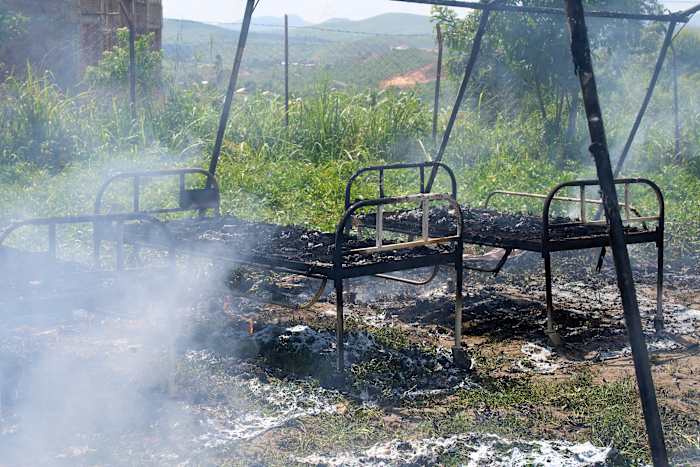
On Thursday, an Ebola treatment center in Rwampara was set on fire by youths who were angered when they were blocked from retrieving the body of a friend who apparently had died of Ebola, according to witnesses and police.

The dangerous work of burying suspected victims is being managed wherever possible by authorities, because the bodies can be highly contagious and lead to further spread when they are prepared for burial or when people gather for funerals.

Julienne Lusenge, president of Women’s Solidarity for Inclusive Peace and Development, a local aid group, said the population’s anger is mostly due to misinformation. “We have lived through years and years of conflict and hardship so rumors spread easily,” she said.

She said some churches have told their congregations the outbreak is fake and that divine protection makes medical care unnecessary.

Grief and the lack of a proper goodbye

In the Ituri province mining town of Mongbwalu where the outbreak is believed to have originated, Lokana Moro Faustin lost his 16-year-old daughter to the disease and bemoaned the fact that he was not able to give her a proper goodbye because of Ebola restrictions.

“At first, we thought it was malaria. But then came vomiting, a high fever, nosebleeds, and bloody diarrhea,” he said, grief-stricken.

The teenager died on May 15 and her body was taken from the hospital by specialized teams and taken directly to the cemetery for a secure burial. Faustin was not able to say goodbye because he was in self-isolation, and it pained him to have his daughter buried by people who were not family.

In Bunia, coffin workshop manager Christian Djakisa said demand has soared since the outbreak began. “We’re here every hour making coffins,” he said.

Aid is being flown in, but front line staff lacks resources

The United Nations said Friday it released $60 million from its Central Emergency Response Fund to accelerate the response in Congo and in the region.

The U.S. has pledged $23 million in funding to bolster the response in Congo and Uganda, and said it would also fund the establishment of up to 50 Ebola treatment clinics in the affected regions.

Lusenge said her group’s small hospital near in Bunia lacks basic protective equipment, exposing nurses and doctors to possible infection, she said. “We only have hand sanitizer and a few masks for the nurses, but we need much more than that,” Lusenge said.

The outbreak is bigger than official figures show, WHO says

Both the WHO and Africa Centers for Disease Control and Prevention believe the outbreak is larger than the cases reported so far.

The region’s already-weak health infrastructure and surveillance capacity has been further weakened by international aid cuts, experts say. The International Rescue Committee said it had to stop its surveillance activities in three out of five areas in Ituri over the last year because of funding cuts.

Armed conflict in the region further complicates efforts to handle the crisis. To get from Bunia to Mongbwalu, aid groups have to brace for potential attacks from armed groups.

“The outbreak can still be contained but the window for action is narrow,” Gabriela Arenas from the International Federation of Red Cross and Red Crescent Societies said Friday.

——

Pronczuk reported from Dakar, Senegal. Associated Press writers Jamey Keaten in Geneva; Constant Same Bagalwa in Bunia, Congo; Jean Yves Kamale in Kinshasa, Congo; Mark Banchereau and Wilson McMakin in Dakar, Senegal contributed to this report.

——

For more on Africa and development: https://apnews.com/hub/africa-pulse

The Associated Press receives financial support for global health and development coverage in Africa from the Gates Foundation. The AP is solely responsible for all content. Find AP’s standards for working with philanthropies, a list of supporters and funded coverage areas at AP.org.

Copyright 2026 The Associated Press. All rights reserved. This material may not be published, broadcast, rewritten or redistributed without permission.


Source link

FDA staff blindsided by move allowing more e-cigarettes and nicotine pouches onto US market

FDA staff blindsided by move allowing more e-cigarettes and nicotine pouches onto US market

WASHINGTON – Senior officials in the Food and Drug Administration’s tobacco center were blindsided by a recent decision that opens the door to allowing more unauthorized electronic cigarettes and nicotine pouches onto the U.S. market, The Associated Press has learned.

The guidelines, posted online earlier this month before former FDA Commissioner Marty Makary resigned, will allow companies to launch certain nicotine-based products before they’ve been fully vetted by regulators.

Some FDA officials tasked with enforcing vaping regulations were not consulted on the changes and only learned of them the night before the document was published, according to two staffers who spoke to the AP on condition of anonymity to discuss confidential agency matters. The document’s sudden appearance sparked internal confusion about how the policy came about and who authorized it, the staffers said.

In recent days, agency officials have convened hourslong meetings grappling with how to implement the six-page memo, which breaks with longstanding FDA policy requiring scientific verification of health benefits for smokers before any new products are introduced.

It’s highly unusual for the FDA to draft new policies without input from the staffers who oversee them.

“It begs the question of whether the true subject matter experts may have actually opposed this policy and were ordered to do it anyway,” said Mitch Zeller, who retired as FDA’s tobacco director in 2022. “And that goes to the ability of the public to have trust and faith in institutions like FDA.”

The vaping guidelines bypassed a federally required period that allows for public comment and revisions. Instead, the FDA published the finalized policy after months of complaints about Makary from industry lobbyists close to the White House. He resigned from the agency last week.

A Health and Human Services spokesperson did not address the origins of the guidance in a written statement.

“This approach strengthens protections against youth nicotine addiction while supporting evidence-based alternatives for adult smokers seeking to move away from combustible tobacco products,” Andrew Nixon said in a statement.

Messages seeking comment from Makary were not immediately returned Friday.

FDA eyes new approach to vaping flavors

Most health researchers agree that e-cigarettes are significantly less harmful than traditional cigarettes, and the products have been promoted in the U.K. and other European countries as an alternative for smokers.

In the U.S., the FDA has struggled to police the market for over a decade. The agency has authorized vaping products from five companies while rejecting millions of other applications, mainly due to the presence of fruit, candy and other sweet flavors that were deemed appealing to kids. And yet, unauthorized vapes are widely available.

But recent changes in Washington and across the U.S. reflect a shifting landscape.

Underage vaping among U.S. teenagers has fallen to its lowest level in more than 10 years, following the disruptions of the pandemic and new state and federal restrictions.

President Donald Trump came to power last year after vowing to “save” the vaping industry. Major tobacco companies, such as Reynolds American and Altria, have contributed millions to political action committees supporting Trump and other administration priorities, including Trump’s inauguration and his proposed White House ballroom.

Despite the influence campaign, vaping issues took a backseat at FDA under Makary. On rare occasions when Makary addressed e-cigarettes, he voiced skepticism about the data showing declining underage use.

Even as FDA staffers were poised to shift course on flavors, Makary and other agency leaders intervened.

In February, one of Makary’s deputies blocked an FDA decision that would have authorized the first fruit-flavored vapes, according to internal memos later released by the agency. FDA reviewers had determined the products were unlikely to be used by children when combined with digital age-verification technology.

The mango- and blueberry-flavored products were finally OK’d during Makary’s last full week heading the FDA, just days before the agency posted the new guidelines allowing unauthorized nicotine products.

Under the guidance, the FDA is supposed to publish a list of e-cigarettes and pouches that are not yet authorized but will be subject to “enforcement discretion,” meaning they can be sold without regulators targeting them for removal. While there is no public list of products that might qualify, the policy is expected to allow for new flavors that had previously been blocked by regulators.

“What we’re seeing is a broader opening up and responsiveness to flavored products by the agency both in terms of a stronger appetite for authorization but also less appetite to take enforcement action against flavored products,” said Brian King, former FDA tobacco director now with the Campaign for Tobacco-Free Kids.

US stores are already packed with illegal flavored vapes

While FDA’s new approach breaks with precedent, it may have little impact on the flavors already available at gas stations, vape shops and convenience stores.

The U.S. market has been flooded for years by unauthorized vapes containing mango, gummy bear, strawberry and dozens of other flavors.

These disposable e-cigarettes filled the vacuum left by Juul when it pulled its high-nicotine flavored products from the market, after they became ubiquitous in U.S. schools beginning around 2017. Currently the company only sells FDA-authorized e-cigarettes in tobacco and menthol flavors.

Juul and other companies now see the chance to directly compete with disposable Chinese vapes, which by some estimates account for 80% of U.S. sales.

“The choice we face is not whether flavored vaping products should be sold in the U.S. They already are,” said Robyn Gougelet, a Juul vice president. “The choice is whether those products should be regulated and responsibly marketed — or illegal, untested, and smuggled into the country.”

Rather than targeting flavors, the FDA said its new enforcement approach will target vapes with specific youth-appealing features, such as designs that resemble children’s toys.

“The reality is they’re just deluged by illegal products coming across the border,” said Jonathan Foulds, a tobacco-addiction specialist at Penn State University. “So they’re making it clear what should be common sense: ‘We’re going to focus on the worst actors.’”

New policy may create winners and losers among vaping firms

It’s far from clear whether FDA’s new approach will be embraced by the vaping industry at large, which includes multinational tobacco companies alongside hundreds of smaller companies selling imported devices from China.

As written, the guidance suggests only e-cigarettes that are under “scientific review” will qualify to launch without FDA authorization. Only a small number of applications typically reach that stage, which requires detailed health data on smokers who switch to the new product, King noted.

“This is certainly going to benefit the larger tobacco companies, which have the resources to get far enough into the application review process and thus won’t be prioritized for enforcement,” King said.

Lobbyists for smaller companies say it’s too early to tell whether the policy will be help or hinder their clients, but they fear being left behind.

“The big companies would love nothing more than to see their largest swath of competitors out of the marketplace,” said Tony Abboud of the Vapor Technology Association.

___

The Associated Press Health and Science Department receives support from the Howard Hughes Medical Institute’s Science and Educational Media Group and the Robert Wood Johnson Foundation. The AP is solely responsible for all content.

Copyright 2026 The Associated Press. All rights reserved. This material may not be published, broadcast, rewritten or redistributed without permission.


Source link

Back to Top
Product has been added to your cart
Compare (0)