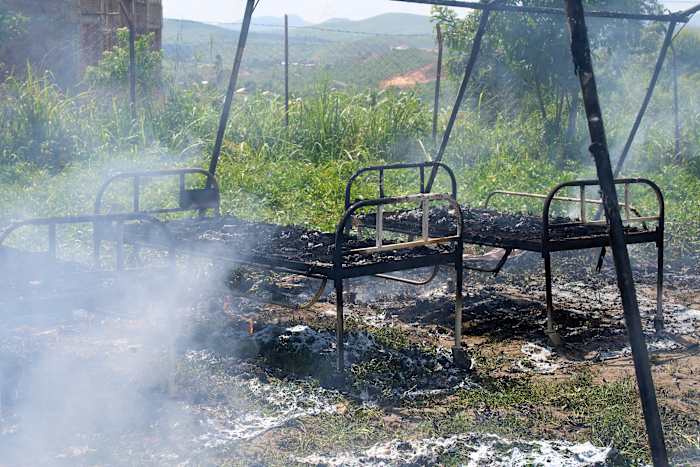
Americans exposed to hantavirus on ship enjoy some Nebraska hospitality while waiting in quarantine

Americans exposed to hantavirus on ship enjoy some Nebraska hospitality while waiting in quarantine

OMAHA, Neb. – The 18 American passengers who were exposed to hantavirus on the MV Hondius cruise ship are getting a taste of Nebraska hospitality as they wait to find out how much longer they will have to remain in quarantine at the hospital in Omaha.

Elsewhere, a 12th illness linked to the ship was confirmed Friday in the Netherlands as health officials continue to monitor hundreds of people who were potentially exposed.

The doctor who runs the National Quarantine Unit where the American passengers are being monitored said at a news conference Friday that none of them are showing any symptoms at this point, but Dr. Michael Wadman referred questions to the Centers for Disease Control and Prevention about whether these 18 people will have to remain at the specialized facility at the University of Nebraska Medical Center for the full 42-day quarantine period.

The CDC didn’t respond Friday to questions about the plan for these passengers staying in what resemble hotel rooms, complete with their own workout machines and a small refrigerator. The rooms are equipped with specialized negative-pressure ventilation and waste sterilization systems to keep germs from escaping.

Hantavirus usually spreads from rodent droppings and is not easily transmitted between people. But the Andes virus detected in the cruise ship outbreak may be able to spread between people in rare cases. Symptoms usually show between one and eight weeks after exposure. Health officials recommended the long quarantine because of the incubation period for the virus.

Passengers arrived with few belongings

Wadman said that once the passengers realized how long they were going to be staying in quarantine, they started ordering things they needed because health officials let them bring only a small plastic sack of belongings with them when they left the MV Hondius. They had to leave their luggage behind, so a steady stream of boxes started arriving at the quarantine unit after the passengers began arriving in Omaha on May 11.

In between the symptom checks twice a day, the staff at the nation’s only dedicated quarantine unit are doing their best to help the passengers pass the time with special meals featuring local food trucks and distinctive Nebraska delicacies like Runzas along with lessons on the sandhill cranes migration that brings millions of the majestic birds to the state every spring and other subjects.

The rooms also have high-speed internet connections to help the passengers connect virtually with family and friends. Jake Rosmarin said it can be lonely at times being so far away from his fiance back in Boston, but the days have mostly been flying by as he calls family and friends and makes videos for his Facebook and Instagram pages where he normally posts travel videos. Rosmarin tries to think positive and not dwell on the fact that he still faces almost another month in quarantine.

“Why am I going to harp on those negative aspects? The time’s just gonna go by slow if I kind of harp on the negatives,” he said.

Hospital staff works to make passengers comfortable

Rosmarin said he really appreciates everything the nurses and doctors from the medical center and adjoining Nebraska Medicine hospital, who volunteer to work at the quarantine unit, have done for him and the other passengers, beginning with the deliveries of his favorite Starbucks iced horchata with oat milk and vanilla cold foam.

“They’ve just been amazing. Truly. Truly, truly, truly. I think they’ve gone above and beyond with making sure that we’re comfortable here,” said Rosmarin, who ordered himself a new mattress pad and pillows along with a set of Mixtiles photos of himself and his fiance to hang on the wall to help make the room homier.

Rosmarin and a few other passengers unexpectedly got a chance to leave their rooms for a few minutes Sunday evening when Omaha was under a tornado warning, but they all wore masks and kept their distance while the medical staff had on full protective suits.

The hospital is planning to give the passengers a taste of Runza on Tuesday and a meal from Omaha Steaks on Thursday of next week. Rosmarin said he ordered a barbecue bacon Runza, which is a mix of meat, seasonings and sauce baked inside bread. The fast food chain that’s known for the sandwiches is almost exclusively in the state, but elsewhere in the country the same meal might be called a bierock.

Nebraska Gov. Jim Pillen, who owns a massive hog farm, said at Friday’s news conference that he’s hoping to arrange a pork tenderloin dinner as well, if he can be sure the hospital chefs will cook it correctly.

Quarantine will likely last roughly another month

Wadman said the passengers who remain in Omaha have all been cooperative despite the fact that the CDC issued a formal order earlier this week to prevent two of them from leaving the quarantine unit.

“I think there’s many that would really like to be home,” Wadman said, but it’s not yet clear that the CDC will allow that before the 42 days are up. Each case will be evaluated individually.

Twelve people worldwide who were aboard the MV Hondius have fallen ill, including one of the crew members that was just confirmed Friday in the Netherlands. Three people from the cruise died, including a Dutch couple that health officials believe were the first exposed to the virus while visiting South America. No deaths have been reported since May 2, according to World Health Organization Director-General Tedros Adhanom Ghebreyesus.

“We continue to urge affected countries to monitor all passengers and crew carefully for the remainder of the quarantine period. More than 600 contacts continue to be followed in 30 countries, and a small number of high risk contacts are still being located,” he said.

University of Nebraska President Jeffrey Gold said the new cases will definitely be considered as public health officials decide how long the passengers have to quarantine, but the CDC is calling the shots on that period.

“Any case, any symptoms, any positive test anywhere gives us more information about the biology of this viral illness. And it as any good scientific approach would be, it influences our decision making,” Gold said.

Copyright 2026 The Associated Press. All rights reserved. This material may not be published, broadcast, rewritten or redistributed without permission.



Source link

Quick Garden Games You Can Set Up In Minutes On A Sunny Day – Diary of the Dad

Quick Garden Games You Can Set Up In Minutes On A Sunny Day – Diary of the Dad


You wait all week for a bit of decent weather, finally get a sunny afternoon… and within ten minutes the kids are back inside asking for a screen.

It’s not that they don’t want to be outside. It’s that “go play in the garden” isn’t a plan — it’s a vague suggestion that lasts about three minutes before boredom kicks in.

The trick isn’t to create some elaborate activity that takes half an hour to set up. It’s having a handful of quick, low-effort games you can throw together on the spot. The kind that feel like a proper activity, but don’t leave you doing all the work.

Here are a few that actually work.

Obstacle Course (Using Whatever You’ve Got)

This is the easiest win, and it works for almost any age.

Grab whatever’s nearby — cones, footballs, garden chairs, sticks, even shoes — and throw together a quick route. Crawl under this, jump over that, run around something, balance along something else.

You’re not building Ninja Warrior. You’re just creating enough structure to make it feel like a challenge.

Why it works is simple: kids love anything that feels like a course or a mission. It gives them a clear goal, and they’ll naturally start timing themselves, racing each other, or trying to beat their own score.

You can set it up in under five minutes and leave them to it.

Shadow Tag

This is one of those games that only really works on a sunny day, which makes it perfect here.

Instead of tagging each other, you tag someone’s shadow with your foot. If you step on their shadow, they’re “it.”

It sounds simple, but it completely changes how kids move. They start dodging, twisting, and watching the ground instead of just sprinting in straight lines.

It’s also a bit less chaotic than full-on tag, which helps if you’ve got a smaller garden. Variations of tag are widely recommended as quick, no-prep outdoor games because they’re easy to learn and get kids moving instantly .

Water Relay

If it’s properly warm, bring water into it — but keep it simple.

Two buckets, one filled with water, one empty. Add a cup, sponge, or even just hands, and the goal is to transfer as much water as possible from one to the other.

You can turn it into a race if there’s more than one child, or just a solo challenge to see how quickly they can fill the second bucket.

There’s no complicated setup, no rules to explain, and no need to buy anything. Just water and something to carry it with.

It works because it feels like play, not a “game” — and anything involving water automatically holds attention longer.

Red Light, Green Light

Another classic that takes about ten seconds to explain.

One person stands at one end of the garden and calls out “green light” to let everyone move, and “red light” to make them freeze. If you move when you shouldn’t, you go back to the start.

That’s it.

Games like this are often used because they build coordination and reaction while staying simple enough for mixed ages .

The real benefit is that it burns energy without turning into chaos. There’s structure, but it still feels like fun.

Scavenger Hunt

You don’t need printed sheets or anything fancy.

Just call out a few things:

  • Something green
  • Something round
  • Something that smells nice
  • Something longer than your arm

Send them off to find each one.

You can make it competitive or keep it relaxed, depending on the mood.

Simple scavenger hunts are known to get kids moving, exploring, and thinking without needing any real setup . That’s exactly what you want when you’re trying to keep things low effort.

Target Toss With Household Items

You don’t need a proper game set for this.

Grab a few buckets, plant pots, or even washing-up bowls. Spread them out and assign points depending on how far away they are.

Then use whatever you’ve got to throw — tennis balls, soft toys, rolled-up socks.

Kids take turns aiming for the targets, adding up scores as they go.

This kind of game works well because it gives a clear objective and a bit of competition without needing much space or setup. Even simple setups like bottles or cups can be used as targets for throwing games .

Animal Races

Garden Game Races

This is chaos in the best possible way.

Mark out a start and finish line, then call out how they have to move:

  • Bunny hops
  • Crab walk
  • Frog jumps
  • Bear crawl

It’s ridiculous, which is exactly why kids love it.

Animal races are often used in outdoor play because they work different muscle groups while keeping things playful and creative .

It’s also one of those games where they’ll start making up their own variations once you get it going.

“I Spy” – But Make It Active

Standard “I Spy” is fine, but it’s not exactly going to keep them moving.

Instead, once they guess the item, they have to run and touch it.

You can make it more interesting by setting rules:

  • Only natural objects
  • Only things of a certain colour
  • Only things smaller than your hand

Even simple games like this work well outdoors because they require no setup and can be adapted on the fly .

It’s an easy way to stretch five minutes of activity into twenty.

DIY Sports Day

You don’t need equipment, medals, or a full event plan.

Just pick a few quick challenges:

  • Sprint race
  • Long jump (from a standing start)
  • Throwing distance
  • Balancing something while walking

Keep score if they’re into it, or don’t if they’re not.

The key here is variety. Instead of one game that burns out quickly, you’ve got a few different mini-games back to back.

It keeps things moving without needing much effort from you.

Freeze Dance (Outdoor Version)

Kids Dancing in the Garden

If you’ve got a phone and a speaker, you’ve got everything you need.

Play music, let them run or dance around, and when it stops they freeze. Anyone still moving does a forfeit — star jumps, a silly dance, whatever you fancy.

It’s simple, but it works because it breaks up the usual running-around pattern with something a bit different.

And importantly, it doesn’t rely on space. Even a small garden is enough.

Why These Work

The common thread with all of these isn’t creativity — it’s simplicity.

Kids don’t need perfectly planned activities. They need something clear, quick to start, and easy to understand.

That’s why classic outdoor games have stuck around for years. They’re easy to learn, require little to no setup, and get kids moving straight away .

If a game takes too long to explain or set up, you’ve already lost them.

You’re not trying to recreate a school sports day or become full-time entertainment. You’re just giving them a starting point.

Once they’re moving, they usually take over anyway — changing rules, adding challenges, dragging siblings into it, or turning one game into something completely different.

And that’s the moment you’re aiming for: when they stop asking for screens because they’ve forgotten about them.


Source link

Legal fight could delay a proposed B settlement for lawsuits in Roundup cancer claims

Legal fight could delay a proposed $7B settlement for lawsuits in Roundup cancer claims

JEFFERSON CITY, Mo. – Delays could be in store for a proposed $7.25 billion settlement covering thousands of claims that the maker of Roundup weedkiller failed to warn people the product could cause cancer.

An attorney opposed to the settlement filed paperwork Friday to move the case to federal court instead of a Missouri court, where people face a June 4 deadline to opt out of the settlement. The dispute about who should preside over the proposed settlement could disrupt its deadlines and delay a resolution about whether it should be approved.

The legal wrangling over the settlement is playing out as the U.S. Supreme Court weighs a case that could block thousands of lawsuits filed in state courts against agrochemical-maker Bayer, which added Roundup to its portfolio when it acquired Missouri-based Monsanto in 2018. Bayer contends the state-level claims that it failed to warn of cancer risks should be forbidden because it followed federal labeling standards that don’t require a warning.

Germany-based Bayer also disputes the assertion that Roundup’s key ingredient, glyphosate, can cause non-Hodgkin lymphoma.

The Environmental Protection Agency has determined that it’s not likely to be carcinogenic to humans when used as directed. But plaintiffs point to a 2015 decision by the World Health Organization’s International Agency for Research on Cancer, which classified the chemical as “probably carcinogenic.”

The case before the Supreme Court was filed on behalf John Durnell, who says he developed non-Hodgkin lymphoma after more than 20 years of spraying Roundup on a community garden in St. Louis. Durnell is not covered by the proposed class-action settlement. But his attorney, Ashley Keller, filed objections opting out of the settlement on behalf of several other clients before also filing a document to shift the settlement case to federal court.

“This is a huge settlement that is extinguishing the rights of tens of thousands of cancer victims,” Keller said Friday. “It was rushed in to state court.”

The move to federal court is sure to face opposition.

Attorney Christopher Seeger, who is proposed as a claimants’ representative in the settlement, denounced the court shift as “a baseless delay tactic that should be promptly denied.”

A statement from Bayer said the move “has no merit,” and it would work to keep the proceedings in state court.

The proposed nationwide settlement was filed in February in St. Louis Circuit Court in Missouri. It’s designed to address most pending Roundup lawsuits, as well as any additional cases brought in the coming years by people who were exposed to Roundup. But if too many claimants opt out, Bayer reserves the right to cancel it.

A hearing on the settlement is scheduled for July 9 in state court. The Supreme Court, meanwhile, is expected to issue a decision in Durnell’s case by the end of June.

The proposed settlement calls for Bayer to make annual payments into a special fund for up to 21 years, totaling as much as $7.25 billion. The amount of money paid out to individuals would vary depending on how they used Roundup, how old they were when diagnosed and the severity of their non-Hodgkin lymphoma.

An agricultural, industrial or turf worker exposed at length to Roundup would receive an average of $165,000 if they were diagnosed with an aggressive form of the illness while younger than age 60, according to the proposed settlement. But those diagnosed at age 78 or older would get an average of $10,000.

Copyright 2026 The Associated Press. All rights reserved. This material may not be published, broadcast, rewritten or redistributed without permission.



Source link

What On Earth Are BuzzBallz And Why Are My Teens Obsessed With Them – Diary of the Dad

What On Earth Are BuzzBallz And Why Are My Teens Obsessed With Them – Diary of the Dad


I’ll be honest, I thought I’d seen it all by the time my kids hit 18. Energy drinks, protein powders, vapes that look like highlighters… none of it really surprises me anymore. But then BuzzBallz appeared in my kitchen fridge like something out of a sci-fi film, and I had to stop and ask: what on earth is that?

At first glance, they look more like bath bombs than booze. Brightly coloured, round little containers with names that sound like sweets rather than alcohol. Naturally, my immediate reaction wasn’t “ah yes, a perfectly normal adult drink,” it was more along the lines of “why does this look like something aimed at a ten-year-old?”

So I did what any mildly confused, slightly concerned dad would do. I asked my kids. And, unsurprisingly, they lit up like I’d just asked about their favourite band.

What Actually Are BuzzBallz

For the uninitiated (like I was about five minutes before this conversation), BuzzBallz are pre-mixed alcoholic drinks. Think cocktails, but already made, sealed in a small plastic sphere, and ready to go. No measuring, no mixing, no effort required.

They come in flavours like “Choco Chiller,” “Strawberry Rita,” and “Tequila ‘Rita,” which doesn’t exactly scream “traditional adult beverage.” More like something you’d find in the chilled aisle next to milkshakes.

From my kids’ perspective, that’s exactly the appeal. They’re easy, they’re portable, and they don’t taste particularly strong. In other words, they remove most of the barriers that used to come with drinking. No awkward first attempts at mixing something drinkable, no harsh taste to get used to. Just crack it open and go.

And yes, before anyone says it, they’re all legally drinking age. That part isn’t the issue.

Why Uni Kids Love Them

After a bit more digging (and a lot of enthusiastic explanations from my two), it became pretty clear why these things have taken off with that age group.

First, convenience. You don’t need anything else. No glasses, no mixers, no planning. They’re the kind of thing you can chuck in a bag before heading out and forget about until you want one.

@louplumbley♬ Originalton – aboutfufu

Second, the taste. I had a small sip of one out of curiosity, and I’ll admit—it barely tasted like alcohol. That’s either impressive or slightly worrying, depending on your point of view.

Third, and probably most importantly, is the whole social media angle. These things are everywhere online. Bright colours, quirky shapes, and names that stand out—it’s basically designed to be photographed and shared. My kids didn’t discover them in a pub. They saw them online first.

And once something gets traction there, it spreads like wildfire.

The Bit That Doesn’t Sit Right With Me

Here’s where I start to feel a bit uneasy about the whole thing.

It’s not really about my kids drinking them. They’re 18, they’re at uni, and let’s not pretend we weren’t all experimenting at that age. That part is normal.

What bothers me more is how these things look.

If you lined up a bunch of BuzzBallz next to soft drinks or novelty sweets, I honestly think most younger kids wouldn’t be able to tell the difference. Bright, colourful, almost toy-like in design. There’s nothing about them that signals “this is alcohol” in the way a bottle of beer or wine does.

And that feels like a strange choice.

Because while my kids know exactly what they are, a younger teenager—or even a child—might not. And in a world where everything is shared online, it doesn’t take much for curiosity to turn into something else.

There’s also the slightly sneaky bit that you don’t really notice at first—they’re stronger than they look. Most of these little balls come in at around 13–15% ABV, which is basically in the same territory as wine. In a small container, that can amount to a couple of units without it feeling like much at all. When something tastes like a milkshake and goes down that easily, I can see how it’d be very easy to underestimate how much you’re actually drinking.

And I think that’s part of what makes them feel a bit off. Not just how they look, but how little they behave like what we used to think of as alcohol.

Trying To Strike A Balance As A Parent

Like most things at this stage of parenting, it’s a bit of a balancing act.

On one hand, you don’t want to overreact. They’re adults now, and part of that is making their own choices—even the questionable ones. Banning things outright or turning it into a big drama usually backfires.

On the other hand, you can’t just ignore the concerns either.

So for me, it’s been more about having the conversation. Asking questions, pointing out what I find odd about it, and making sure they’re at least aware of the bigger picture. Not in a lecture-y way, just a “have you actually thought about this?” kind of way.

To be fair to them, they get it. They can see why it looks a bit off from an outside perspective. It doesn’t stop them buying them, of course, but at least the awareness is there.

And realistically, that’s about as much as you can hope for at this stage.

It’s Not Exactly How It Used To Be

I miss these guys

I think that’s the thing that keeps coming back to me with all of this—it just isn’t how drinking used to look.

When I was their age, it was cheap lager, strong cider, or whatever you could get your hands on that vaguely tasted like alcohol. Half the experience was grimacing your way through it. You knew you were drinking, no question about it.

This feels different. It’s smoother, easier, and in some ways almost disguised. The barriers that made you slow down a bit—taste, effort, even just the hassle of getting hold of something—aren’t really there anymore.

I’m not saying it’s worse across the board. In some ways, it’s probably a more controlled, more predictable kind of drinking. But it does feel like a shift. Less about “learning to drink” and more about something that’s been pre-packaged to be as easy as possible from the start.

And maybe that’s why it stands out so much when you first see one sitting in your fridge.

It Probably Won’t Be The Last Weird Trend

If there’s one thing I’ve learned over the years, it’s that this won’t be the last time something like this pops up out of nowhere.

There’ll be another drink, another trend, another product that makes you stop and think, “who exactly is this aimed at?” And your kids will embrace it long before you’ve even worked out what it is.

BuzzBallz just happen to be the current one.

I’m not losing sleep over it, but I’m definitely raising an eyebrow. And I’ll keep doing what I’ve always done—keeping an eye on things, asking the occasional awkward question, and quietly wondering how we went from warm cans of lager in a park to neon cocktail balls that look like they belong in a toy shop.

Parenting teenagers doesn’t get easier. It just gets… weirder.


Source link

Advocacy group sues Trump administration over access to abortion for veterans

Advocacy group sues Trump administration over access to abortion for veterans

An advocacy group has filed suit against the Trump administration over its decision to reinstate a near-ban on abortions for veterans and their family members who depend on the U.S. Department of Veterans Affairs for healthcare.

The federal lawsuit filed Thursday says the rule finalized by the VA on Dec. 31 takes away limited abortion access that was “crucial for the health, autonomy, and equality of veterans and their family members.”

Attorneys for the group Minority Veterans of America want the U.S. Court of Appeals for the Federal Circuit to throw out the rule. They say the VA adopted the change without citing medical evidence or other justifications, violating the Administrative Procedures Act that governs federal rulemaking.

The VA did not include abortion in its coverage until 2022. President Joe Biden’s administration added it months after the U.S. Supreme Court overturned Roe v. Wade and states’ abortion bans began taking effect.

Abortion access the VA provided under Biden was limited, applying only in cases when a pregnant woman’s life or health was at risk, or in cases of rape or incest.

The Biden change allowed the VA to provide abortion even in states where it was banned. And it brought the VA’s coverage into line with other federal healthcare plans — including Medicaid and TriCare coverage for active military members and their families — that allowed limited abortion access.

The VA announced its proposal to undo those changes last August, a few months after President Donald Trump returned to the White House.

The VA had said it will still provide abortions in cases where a pregnant woman’s life is threatened. That’s something state laws allow, even in places where bans are in place.

However, the VA no longer allows exceptions for abortions in cases of rape, incest or to protect a pregnant woman’s health. Abortion counseling is also no longer allowed.

A VA spokesperson declined to comment, noting the agency typically doesn’t comment on pending litigation.

Minority Veterans of America says it represents more than 3,600 members across the U.S.

“Our community includes veterans with complex medical histories, those who have experienced pregnancy complications, and survivors of sexual violence and trauma, all of whom need access to abortion care and counseling to protect their health,” Lindsay Church, the group’s executive director, said in a statement.

In publishing its final rule in December, the VA said it was restoring the agency’s longstanding position that abortions were not “needed” under federal law and that “this determination did not prohibit providing life-saving care to pregnant veterans.”

The lawsuit says one of Minority Veteran of America’s members is a military veteran who just learned she was pregnant in early May. She suffers from chronic pain that has been exacerbated by the pregnancy, placing her health “at substantial risk,” says the lawsuit, which withheld the woman’s name to protect her privacy.

The lawsuit says the VA won’t allow the unnamed veteran to receive an abortion “even if her health is at risk, unless a provider determines an abortion is necessary to save her life.”

___

Bynum reported from Savannah, Georgia.

Copyright 2026 The Associated Press. All rights reserved. This material may not be published, broadcast, rewritten or redistributed without permission.


Source link

Modern Parenting: How Dads Support Mothers with Momcozy Air 1 – Diary of the Dad

Modern Parenting: How Dads Support Mothers with Momcozy Air 1 – Diary of the Dad


Early parenthood brings unparalleled joy, but it is also accompanied by exhaustion, uncertainty, and the challenge of balancing daily responsibilities. Fathers are becoming more involved in the day-to-day life of their children and more aware of the dual physical and emotional demands placed on mothers.

Whether it’s settling the baby to sleep at night, helping with household chores, or ensuring the morning routine doesn’t leave mum feeling rushed, supporting mothers has evolved into a shared responsibility. In this new rhythm of parenting, practical support and everyday understanding can make a significant difference for both mums and dads.

The Shift Toward Shared Parenting

Breastfeeding is meaningful, but it can also be physically demanding, time-sensitive, and exhausting for mothers. Between the discomfort, pumping schedules, and the constant demands of caring for the baby, home, or work, many mums often feel the weight of more responsibilities than they let on.

When pumping becomes inconvenient or hard to fit into the daily routine, dad’s support—whether through practical help or emotional understanding—becomes especially crucial. In these moments, small gestures and genuine support can make a world of difference in alleviating stress and ensuring that mothers feel supported.

The Role of Innovation in Parenting Tools

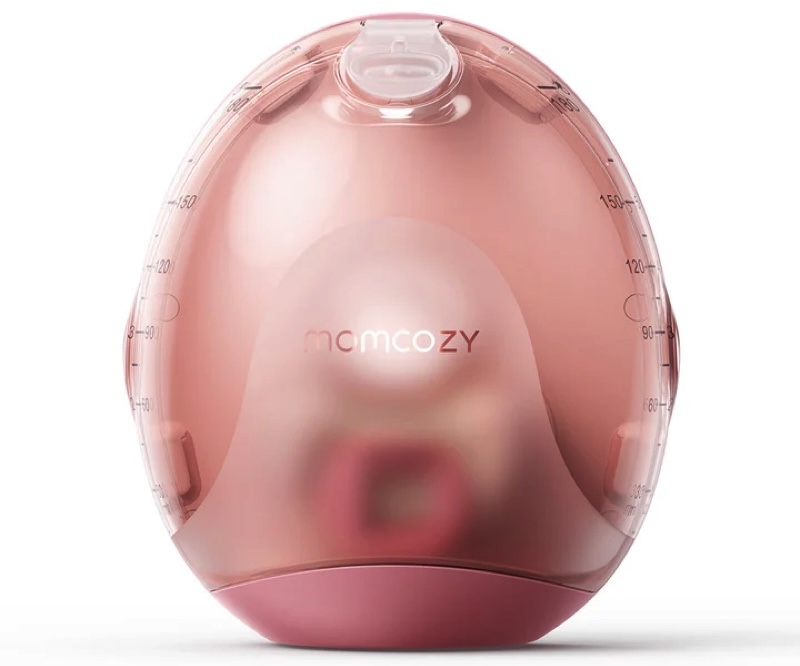
Momcozy Air 1 Ultra-slim Breast Pump

Modern parenting tools are crucial in reducing stress and saving valuable time. When breastfeeding and pumping challenges are a daily reality, “the right product is not just a convenient tool—it becomes a practical form of support”.

The Momcozy Air 1 fits seamlessly into this dynamic, offering mothers an easier way to manage their feeding needs while providing dads another way to support the daily routine. Whether families are staying at home or heading out, tools designed with real-life use in mind help both parents feel more prepared and in control.

Discreet and Flexible Feeding Solutions

Feeding needs often have to adapt to busy and unpredictable schedules—whether running errands, attending family visits, or heading out for a day of activities. The ultra-slim and discreet design of the Momcozy Air 1 allows mothers to use it naturally under everyday clothing, without discomfort or self-consciousness.

Its portability provides mothers with greater freedom, whether they are doing the school run, waiting in the car for a few minutes, or stopping for a quick coffee. This level of flexibility is especially crucial in today’s fast-paced parenting landscape.

Spotlight on Smart Design – Introducing Momcozy

Momcozy product

Momcozy focuses on practical, parent-first innovation that is committed to providing designs for real family life. The Momcozy Air 1 Ultra-slim breast pump stands out with its ultra-slim, invisible design, making it easier for mothers to integrate into their daily routines. Its portability and smart design are game-changers for modern parenting lifestyles—whether mum is handling work tasks, spending time at home, or out with the family.

Supporting Families, Together

Parenting is best approached as a shared journey. The right tools can ease the pressure and help both parents feel more confident in their roles. When dad’s support meets thoughtful innovation, families stay more connected and better supported during the early months. Discover how the Momcozy Air 1 can help make everyday parenting feel more manageable for the whole family.


Source link

Congo suspends funeral wakes and big gatherings in Ebola outbreak, as WHO upgrades risk assessment

Congo suspends funeral wakes and big gatherings in Ebola outbreak, as WHO upgrades risk assessment

GENEVA – Authorities in northeastern Congo banned funeral wakes and gatherings of more 50 people Friday in an effort to curb a rapidly spreading Ebola outbreak in a region where medical workers have struggled with a lack of resources and pushback from angry residents.

The World Health Organization said that the outbreak now poses a “very high” risk for Congo — up from a previous categorization of “high” — but that the risk of the disease spreading globally remains low.

WHO Director-General Tedros Adhanom Ghebreyesus said 82 cases and seven deaths have been confirmed in Congo, but that the outbreak is believed to be “much larger.”

There is no available vaccine for the Bundibugyo virus, which spread undetected for weeks in Congo’s Ituri Province following the first known death while authorities tested for another, more common, Ebola virus and came up negative. There are now 750 suspected cases and 177 suspected deaths, though more are expected as surveillance expands.

“We are trying to catch up,” Congo Foreign Minister Thérèse Kayikwamba Wagner told the AP. “It is a race against the clock.”

Efforts ramping up in Ituri Province

Supplies were being rushed to Ituri in the northeastern corner of the country, where nearly a million people have been displaced by armed conflicts over mineral resources. Ramping up contact tracing is a priority, Kayikwamba Wagner said.

In the provincial capital of Bunia, AP reporters saw empty emergency treatment centers, and doctors in the nearby town of Bambu using expired medical masks while tending to suspected Ebola patients.

The provincial government said Friday it was temporarily banning wakes and gatherings of more than 50 people. It said funerals must be conducted in strict compliance with health protocols. The authorities also required journalists to obtain a permit to report on the outbreak, impeding their work.

Illness spreads in rebel-held areas

The illness also has been reported in two Congolese provinces to the south of Ituri — North Kivu and South Kivu, where the Rwanda-backed M23 rebel group controls many key cities, including Goma and Bukavu, where the rebels reported two cases.

The group said Friday it was creating a crisis team to fight the outbreak.

Kayikwamba Wagner said having the illness in rebel-held areas was alarming because “M23 is, despite whatever ambitions they may have, thoroughly ill equipped” to fight the disease.

She said the Congo government and rebels were not communicating on the outbreak.

Response clashes with local customs

The efforts of health officials and aid groups have met with pushback from communities due to misinformation or situations where medical policy has clashed with local customs such as burial rites.

On Thursday, an Ebola treatment center in Rwampara was set on fire by youths who were angered when they were blocked from retrieving the body of a friend who apparently had died of Ebola, according to witnesses and police.

The dangerous work of burying suspected victims is being managed wherever possible by authorities, because the bodies can be highly contagious and lead to further spread when they are prepared for burial or when people gather for funerals.

Julienne Lusenge, president of Women’s Solidarity for Inclusive Peace and Development, a local aid group, said the population’s anger is mostly due to misinformation. “We have lived through years and years of conflict and hardship so rumors spread easily,” she said.

She said some churches have told their congregations the outbreak is fake and that divine protection makes medical care unnecessary.

Grief and the lack of a proper goodbye

In the Ituri province mining town of Mongbwalu where the outbreak is believed to have originated, Lokana Moro Faustin lost his 16-year-old daughter to the disease and bemoaned the fact that he was not able to give her a proper goodbye because of Ebola restrictions.

“At first, we thought it was malaria. But then came vomiting, a high fever, nosebleeds, and bloody diarrhea,” he said, grief-stricken.

The teenager died on May 15 and her body was taken from the hospital by specialized teams and taken directly to the cemetery for a secure burial. Faustin was not able to say goodbye because he was in self-isolation, and it pained him to have his daughter buried by people who were not family.

In Bunia, coffin workshop manager Christian Djakisa said demand has soared since the outbreak began. “We’re here every hour making coffins,” he said.

Aid is being flown in, but front line staff lacks resources

The United Nations said Friday it released $60 million from its Central Emergency Response Fund to accelerate the response in Congo and in the region.

The U.S. has pledged $23 million in funding to bolster the response in Congo and Uganda, and said it would also fund the establishment of up to 50 Ebola treatment clinics in the affected regions.

Lusenge said her group’s small hospital near in Bunia lacks basic protective equipment, exposing nurses and doctors to possible infection, she said. “We only have hand sanitizer and a few masks for the nurses, but we need much more than that,” Lusenge said.

The outbreak is bigger than official figures show, WHO says

Both the WHO and Africa Centers for Disease Control and Prevention believe the outbreak is larger than the cases reported so far.

The region’s already-weak health infrastructure and surveillance capacity has been further weakened by international aid cuts, experts say. The International Rescue Committee said it had to stop its surveillance activities in three out of five areas in Ituri over the last year because of funding cuts.

Armed conflict in the region further complicates efforts to handle the crisis. To get from Bunia to Mongbwalu, aid groups have to brace for potential attacks from armed groups.

“The outbreak can still be contained but the window for action is narrow,” Gabriela Arenas from the International Federation of Red Cross and Red Crescent Societies said Friday.

——

Pronczuk reported from Dakar, Senegal. Associated Press writers Jamey Keaten in Geneva; Constant Same Bagalwa in Bunia, Congo; Jean Yves Kamale in Kinshasa, Congo; Mark Banchereau and Wilson McMakin in Dakar, Senegal contributed to this report.

——

For more on Africa and development: https://apnews.com/hub/africa-pulse

The Associated Press receives financial support for global health and development coverage in Africa from the Gates Foundation. The AP is solely responsible for all content. Find AP’s standards for working with philanthropies, a list of supporters and funded coverage areas at AP.org.

Copyright 2026 The Associated Press. All rights reserved. This material may not be published, broadcast, rewritten or redistributed without permission.



Source link

Why Your Baby Won’t Sleep Through the Night (And How to Fix It Fast) – Diary of the Dad

Why Your Baby Won’t Sleep Through the Night (And How to Fix It Fast) – Diary of the Dad


Does your baby won’t sleep no matter what you try? That endless rocking, those cries at 2 a.m., it leaves you wiped out. I get it, I’ve done the midnight floor pacing with my own kids while everyone else slept soundly. Good news, though: a few smart tweaks can change everything quickly.

Grab something practical like a comfy breastfeeding pillow to make feeding and settling easier; it holds the baby just right in those late hours. This guide breaks down why your baby won’t sleep and gives fixes that actually work fast. Tackle ’em one by one, and those rough nights turn into real rest for you all.

Common Physical Discomforts That Prevent Baby From Settling

Babies feel stuff super strong, so little aches turn into big no-sleep drama. Your baby won’t sleep even when dead tired, making bedtime a fight. Let’s hit the usual suspects and fix ’em quick.

Gas

Gas builds up from air they swallow or milk that doesn’t digest right. Baby squirms, arches their back, pulls legs to chest. Easy fix: tummy time on something soft, or lay ’em on back and pedal their legs like a bike. Burp often too, every couple minutes mid-feed, to let those bubbles out before they get bad.

Teething

Teething hits around six months with puffy red gums and drools everywhere, soaking sheets and outfits. Chill a washcloth or teething ring for numb relief, or rub a clean finger gentle on the gums, it soothes right away. Overheating sneaks up too; too many clothes means sweat and cranky vibes. Put one extra layer on the baby than you got on, check their neck, if damp, peel one off. Keep the room at 68 to 72 degrees Fahrenheit, nice and cool.

Reflux

Reflux bugs lots of newborns, milk comes back up, burns their throat. They cry hard after eating, arch backs in pain. Hold ’em up straight 20-30 minutes after feeding, and prop the crib mattress head a tad (no pillows though, suffocation danger).

The Early Signs

Spot these early with these signs:

  • Gas: Fists tight, grunting, knees to chest
  • Teething: Drool city, chewing fists, tugging ears
  • Overheating: Sweaty head or neck, fast breaths, red cheeks
  • Reflux: Spits up lots after eats, hiccups that won’t quit

Developmental Milestones and Their Impact on Sleep Cycles

Babies grow fast, and those leaps mess with sleep big time. Your baby won’t sleep deep ’cause their brain’s buzzing with new stuff, stealing rest time. Hits on schedules like growth spurts at 2, 4, 6, 8, 10 weeks, then milestones every couple months.

Take three months, they get hooked on their hands, staring, grabbing, won’t quit, so drifting off? Nope. Four months, rolling over the big thing; they practice in the crib, waking themselves over and over. Sleep regressions crank it up, at nine months, separation anxiety plus crawling or standing means crib jailbreaks at night. Even pre-walking brain work tires ’em out, chopping nights into wake-ups.

Naps shorten daytime, stretches night wakings. Log it all simple, milestones next to sleep shifts, patterns pop right out. To get through:

  • Extra daytime cuddles to fill their love tank
  • Practice skills in playtime, like rolling on a soft mat
  • Stick to routines for that steady feel amid the storm

Creating the Ultimate Sleep-Inducing Nursery Environment

The nursery sets the sleep signal for the baby. Make a cozy “sleep cave,” and baby won’t sleep moments? Gone. Blackout first, heavy curtains or shades kill every light bit, for naps or night feeds; dark kicks in rest mode. White noise is steady, like womb sounds from a machine, ocean waves or fan hum, to block house noise. Crib basics: firm mattress, tight sheet only. No blankets, bumpers, toys till one year, SIDS no-go. Swaddle newborns tight for that hugged feel.

Temp cool with air moving, 68-72°F, humidifier if dry for comfy air. Lavender whiff on a cloth nearby (not on baby) calms extra. Build the ritual:

  • Red nightlight for changes, keeps melatonin going
  • Same sleep spot always for good vibes
  • Soft surfaces everywhere, like changing pads

Identifying and Avoiding the “Overtired” Threshold

Baby crawling on bed and crying

Nothing sabotages sleep like overtiredness, where missing the ideal window triggers a cortisol surge, leaving the baby wired yet exhausted. This vicious cycle ensures your baby won’t sleep even when desperate for it. Spotting early cues prevents escalation: subtle yawning evolves into eye-rubbing, dazed stares, and escalating fussiness from whines to wails.

Tailor wake windows by age to stay ahead:

  • Newborns: 45-60 minutes
  • 3 months: 90 minutes
  • 6 months: 2 hours
  • 9 months: 3 hours maximum

Set phone timers post-nap, following a feed-play-sleep cycle, and ban screens, their blue light ramps up alertness. Common traps include late-evening play that sneaks in fatigue or skipped naps that shorten future windows. Rescue overtired moments with gentle rocking, but reset with stricter timing tomorrow. Catch it early, and sleep transitions flow effortlessly, patience here yields massive rewards.

The Importance of a Predictable and Calming Bedtime Routine

A consistent bedtime routine acts as a powerful cue, reassuring baby that rest is near and helping prevent those “baby won’t sleep” marathons. Begin 30 minutes before your target bedtime: a warm bath relaxes tense muscles, followed by gentle lotion massage on legs, arms, and back under dim lights to boost melatonin.

Transition to a calm feeding spot, perhaps with soft rocking and lullabies. Add a short book for bonding, then activate white noise, whisper goodnights, and place in the crib drowsy but awake. Protect this ritual fiercely, pack a portable kit for travel or share the exact script with partners. The benefits compound over time:

  • Predictability reduces resistance
  • It releases built-up daytime stress
  • Fosters emotional security

Distinguishing Between Hunger Cues and Comfort Seeking

Baby crawling toward bottle

Confusing hunger with comfort needs prolongs wakings, so learning to differentiate is key when your baby won’t sleep. True hunger shows urgent rooting: sucking fists, lip-smacking, and frantic cries, with head turning to cheek strokes. Time since the last feed matters, under four hours for young infants signals real need.

Comfort seeking, however, involves softer whimpers, failed self-soothing, and quick settling in arms, often with eye contact craving connection over calories. Test with a “dream feed” before your own bedtime: gently top off without fully waking them. If they drift off sans feeding, it is comforting. Balance strategically:

  • Cluster feeds in evenings for newborns
  • Phase out dream feeds by six months
  • Introduce solids later to extend night stretches

Age-Appropriate Wake Windows and Daytime Nap Balance

Daytime naps directly fuel nighttime sleep, but poor balance means your baby won’t sleep when darkness falls. Newborns need 16-18 total hours, catnapping frequently in 3-4 short bursts with 45-60 minute wake windows.

By four months, consolidate to three naps (2-3 hours total), stretching windows to 2.5 hours. At six to eight months, drop to two naps with three-hour windows and 14 total hours. Toddlers transition to one nap amid four-hour windows.

Optimize with this chart:

Age Wake Windows Nap Structure Total Sleep
Newborn 45-60 min 3-4 short naps 16-18 hrs
4 months 2.5 hrs 3 naps 14-15 hrs
6-8 months 3 hrs 2 naps 14 hrs
12+ months 4 hrs 1 nap 12-14 hrs

When to Consult a Pediatrician About Persistent Sleep Issues

Baby with doctor

While most tweaks yield quick wins, if your baby won’t sleep issues linger for weeks, professional input is wise. Red flags warrant a prompt visit:

  • Snoring or breathing pauses (possible sleep apnea)
  • Night terrors: Intense screams with open, unresponsive eyes
  • Extreme fussiness paired with fever, rash, or poor weight gain
  • Regressions exceeding four weeks

Maintain a detailed sleep log with times, feeds, and cry durations, and share it. Pediatricians can rule out ear infections, allergies, anemia, or rare conditions like restless legs syndrome. Trust your instincts; expert reassurance provides peace beyond enduring alone.

Final Thoughts

You’ve got the tools to conquer this, baby won’t sleep phases forge resilient parents. Layer in discomfort fixes, rock-solid routines, and nap balance for steady progress. Celebrate milestones like that first solid stretch. Your rested family awaits sweeter dreams ahead.


Source link

When You’ve Shouted At Your Kids And You Can’t Take It Back – Diary of the Dad

When You’ve Shouted At Your Kids And You Can’t Take It Back – Diary of the Dad


There is a particular kind of silence that comes after you have shouted at your children.

Not normal silence. Not the peaceful kind you spend half your life wishing for when the house sounds like someone has released farm animals into the hallway. This silence feels heavier. Your child goes quiet. You go quiet. The room changes.

And then the guilt arrives.

You replay what you said. You remember the look on their face. You tell yourself you had every right to be cross, because maybe you did. Maybe they had pushed too far. Maybe you had asked calmly five times. Maybe you were tired, late, stressed, hungry, worried about money, trying to cook dinner, answering a work message and dealing with a child who had chosen that exact moment to go fully feral.

But still, you shouted.

And now you are standing there with that horrible feeling in your chest, knowing you cannot unsay it.

This article is not about pretending dads should be calm, saintly parenting robots. No one is. Every parent has a breaking point. The important bit is what happens next.

What Shouting Can Feel Like To A Child

When a child gets shouted at, they are not always hearing the careful point you think you are making.

You might be trying to say, “That behaviour is not acceptable.”

They might be hearing, “Dad is scary right now.”

Children’s brains are still learning how to manage big feelings, read situations and understand danger. When an adult suddenly raises their voice, especially an adult they rely on for safety, their body can react as if there is a threat. That can mean fight, flight, freeze or fawn.

Some children shout back. That does not always mean they are being disrespectful. Sometimes it is their nervous system meeting fire with fire.

Some burst into tears.

Some go completely blank.

Some become overly apologetic, trying to fix the situation as quickly as possible.

Some seem unaffected, but then become clingy, withdrawn or difficult later.

This matters because shouting does not usually help a child learn the lesson in the moment. Fear gets in the way. The message becomes blurred by the volume, the face, the tension and the shock.

That does not mean one bad moment ruins your child. It does not. Children are not made of glass. But repeated shouting, especially when it includes shame, insults or fear, can damage trust and make home feel less emotionally safe. The American Academy of Pediatrics warns that harsh verbal discipline can be ineffective and harmful, particularly when it causes shame or emotional pain.

So no, you do not need to spiral into thinking you have destroyed everything.

But you do need to repair it.

The Guilt Afterwards Is Not Useless

The guilt after shouting can be brutal.

You might feel like you have failed. You might think, “I’m becoming the kind of dad I never wanted to be.” You might remember moments from your own childhood. You might feel ashamed that a small child managed to drag that level of anger out of you.

But guilt is not always the enemy.

Shame says, “I am a terrible dad.”

Guilt says, “That was not the dad I want to be.”

There is a difference.

If you are reading something like this because you want to do better, that matters. It means you care. It means your conscience is working. It means you are not shrugging it off and expecting your child to carry the emotional weight of your outburst.

Good dads still lose their temper. Good dads still get overwhelmed. Good dads still have moments they wish they could rewind.

What makes the difference is whether you take responsibility afterwards.

Not with a grand speech. Not with dramatic self-punishment. Not by making your child reassure you.

Just by going back in, calmly and honestly, and showing them that the relationship is safe.

Do Not Rush Straight Into The Lesson

One of the biggest mistakes after shouting is trying to carry on with the original point too quickly.

You are still angry. They are still upset. Everyone’s system is still buzzing. That is not the moment for a lecture about shoes, homework, screen time, lying, fighting with siblings or whatever started it.

First, calm your own body down.

Step into another room if it is safe to do so. Take a minute. Breathe properly. Put your hands on the kitchen counter. Get a glass of water. Say nothing for a moment rather than saying something worse.

This is not weakness. It is control.

Children need boundaries, but they also need adults who can come back from anger without making the whole room feel unsafe.

Once you are calmer, return to them.

Not six hours later if you can help it. Not after pretending nothing happened. Children often know when something has gone wrong, even if they cannot explain it. Leaving them alone with that feeling can make the moment seem bigger than it needs to be.

Say Sorry Without Handing Over The Boundary

Sad child talking to father

A proper apology to a child does not mean they were right. It does not mean there are no consequences. It does not mean you have lost authority.

It means you are taking responsibility for your behaviour.

You can say:

“I was right to be cross about what happened, but I was wrong to shout like that.”

That sentence is important because it separates the boundary from the outburst.

Your child still needs to know that hitting their brother was wrong, or running into the road was dangerous, or speaking to someone like that was not acceptable.

But they also need to know that adults are responsible for how they handle anger.

Try something simple:

“I’m sorry I shouted. I got too angry and I frightened you. That wasn’t okay. I love you, and we’re alright.”

That is enough.

Do not add, “But you made me shout.”

Do not say, “I wouldn’t have shouted if you had listened.”

That turns the apology into blame. It teaches them that your loss of control was their responsibility.

It was not.

Their behaviour may have needed correcting. Your shouting is yours to own.

Help Them Feel Safe Again

After shouting, your child may not immediately want a cuddle or a chat. That is okay.

Some children need closeness. Some need space. Some need to test whether you really are calm again.

You can offer safety without forcing it.

“I’m here when you’re ready.”

“Do you want a cuddle, or do you want a bit of space?”

“We’re okay. I’m not angry like that now.”

For younger children, physical reassurance can help if they want it. Sit near them. Soften your voice. Get down to their level. Let your face show that the storm has passed.

For older children, the repair may need more dignity. They might not want a big emotional moment. They might prefer a quieter apology later, when no one else is around.

The point is not to make yourself feel better as fast as possible. The point is to help them feel loved and secure again.

Harvard’s Center on the Developing Child stresses that supportive relationships with caring adults can buffer children’s stress responses and support resilience.

That is what repair is. It is not pretending the shouting did not matter. It is showing them that difficult moments can be mended.

Talk About What Happened Once Everyone Is Calm

Father Explaining to Daughter

Later, when the emotional temperature has dropped, you can return to the original issue.

This is where you make the distinction clear.

“I want to talk about what happened earlier. You were not in trouble because I was in a bad mood. You were in trouble because you did something dangerous.”

Or:

“I should not have shouted. But we still need to talk about the way you spoke to your mum.”

This teaches something powerful.

It teaches them that feelings are allowed, but behaviour still matters.

It teaches them that adults can apologise without giving up the job of parenting.

It teaches them that love does not disappear during conflict.

And it teaches them a skill they will need for the rest of their lives: how to repair after getting something wrong.

Because your child will lose their temper too. They will say things they regret. They will hurt people they love. They will need to know what to do afterwards.

You are not just fixing this moment. You are modelling the way back.

Look At What Pushed You There

After things have settled, it is worth asking yourself what really happened.

Not to excuse it. To understand it.

Were you exhausted?

Were you trying to do too many things at once?

Had you ignored your own stress all day until one small thing tipped you over?

Is this happening often?

Is there a particular behaviour from your child that always seems to push the same button?

Sometimes shouting is about the child’s behaviour. Sometimes it is about your own overload. Often, it is both.

If it is becoming a pattern, that needs attention. Not because you are a monster, but because your home cannot run on everyone walking around waiting for the next explosion.

You might need more breaks. You might need to talk to your partner properly. You might need to change routines, lower expectations, get more sleep, spend less time trying to parent while distracted, or get support if your anger feels bigger than you can manage.

There is no shame in that. The shame would be noticing the pattern and doing nothing.

Your Child Does Not Need Perfect

Dad hugging daughter

Here is the part worth holding onto.

Your child does not need a perfect dad.

They need a dad who comes back.

A dad who can say, “I got that wrong.”

A dad who does not make them responsible for adult anger.

A dad who can be firm without being frightening.

A dad who keeps learning.

You cannot take the shouting back. None of us can. Once it has happened, it has happened.

But you can change what it means.

You can make it a moment where your child learns that people can lose their way and still repair. That anger does not have to end in distance. That apologies matter. That love is still there after the noise.

And perhaps, quietly, you learn something too.

Not that you are a bad dad.

That you are a human one.

And a human dad who is willing to repair is still a dad worth trusting.


Source link

FDA staff blindsided by move allowing more e-cigarettes and nicotine pouches onto US market

FDA staff blindsided by move allowing more e-cigarettes and nicotine pouches onto US market

WASHINGTON – Senior officials in the Food and Drug Administration’s tobacco center were blindsided by a recent decision that opens the door to allowing more unauthorized electronic cigarettes and nicotine pouches onto the U.S. market, The Associated Press has learned.

The guidelines, posted online earlier this month before former FDA Commissioner Marty Makary resigned, will allow companies to launch certain nicotine-based products before they’ve been fully vetted by regulators.

Some FDA officials tasked with enforcing vaping regulations were not consulted on the changes and only learned of them the night before the document was published, according to two staffers who spoke to the AP on condition of anonymity to discuss confidential agency matters. The document’s sudden appearance sparked internal confusion about how the policy came about and who authorized it, the staffers said.

In recent days, agency officials have convened hourslong meetings grappling with how to implement the six-page memo, which breaks with longstanding FDA policy requiring scientific verification of health benefits for smokers before any new products are introduced.

It’s highly unusual for the FDA to draft new policies without input from the staffers who oversee them.

“It begs the question of whether the true subject matter experts may have actually opposed this policy and were ordered to do it anyway,” said Mitch Zeller, who retired as FDA’s tobacco director in 2022. “And that goes to the ability of the public to have trust and faith in institutions like FDA.”

The vaping guidelines bypassed a federally required period that allows for public comment and revisions. Instead, the FDA published the finalized policy after months of complaints about Makary from industry lobbyists close to the White House. He resigned from the agency last week.

A Health and Human Services spokesperson did not address the origins of the guidance in a written statement.

“This approach strengthens protections against youth nicotine addiction while supporting evidence-based alternatives for adult smokers seeking to move away from combustible tobacco products,” Andrew Nixon said in a statement.

Messages seeking comment from Makary were not immediately returned Friday.

FDA eyes new approach to vaping flavors

Most health researchers agree that e-cigarettes are significantly less harmful than traditional cigarettes, and the products have been promoted in the U.K. and other European countries as an alternative for smokers.

In the U.S., the FDA has struggled to police the market for over a decade. The agency has authorized vaping products from five companies while rejecting millions of other applications, mainly due to the presence of fruit, candy and other sweet flavors that were deemed appealing to kids. And yet, unauthorized vapes are widely available.

But recent changes in Washington and across the U.S. reflect a shifting landscape.

Underage vaping among U.S. teenagers has fallen to its lowest level in more than 10 years, following the disruptions of the pandemic and new state and federal restrictions.

President Donald Trump came to power last year after vowing to “save” the vaping industry. Major tobacco companies, such as Reynolds American and Altria, have contributed millions to political action committees supporting Trump and other administration priorities, including Trump’s inauguration and his proposed White House ballroom.

Despite the influence campaign, vaping issues took a backseat at FDA under Makary. On rare occasions when Makary addressed e-cigarettes, he voiced skepticism about the data showing declining underage use.

Even as FDA staffers were poised to shift course on flavors, Makary and other agency leaders intervened.

In February, one of Makary’s deputies blocked an FDA decision that would have authorized the first fruit-flavored vapes, according to internal memos later released by the agency. FDA reviewers had determined the products were unlikely to be used by children when combined with digital age-verification technology.

The mango- and blueberry-flavored products were finally OK’d during Makary’s last full week heading the FDA, just days before the agency posted the new guidelines allowing unauthorized nicotine products.

Under the guidance, the FDA is supposed to publish a list of e-cigarettes and pouches that are not yet authorized but will be subject to “enforcement discretion,” meaning they can be sold without regulators targeting them for removal. While there is no public list of products that might qualify, the policy is expected to allow for new flavors that had previously been blocked by regulators.

“What we’re seeing is a broader opening up and responsiveness to flavored products by the agency both in terms of a stronger appetite for authorization but also less appetite to take enforcement action against flavored products,” said Brian King, former FDA tobacco director now with the Campaign for Tobacco-Free Kids.

US stores are already packed with illegal flavored vapes

While FDA’s new approach breaks with precedent, it may have little impact on the flavors already available at gas stations, vape shops and convenience stores.

The U.S. market has been flooded for years by unauthorized vapes containing mango, gummy bear, strawberry and dozens of other flavors.

These disposable e-cigarettes filled the vacuum left by Juul when it pulled its high-nicotine flavored products from the market, after they became ubiquitous in U.S. schools beginning around 2017. Currently the company only sells FDA-authorized e-cigarettes in tobacco and menthol flavors.

Juul and other companies now see the chance to directly compete with disposable Chinese vapes, which by some estimates account for 80% of U.S. sales.

“The choice we face is not whether flavored vaping products should be sold in the U.S. They already are,” said Robyn Gougelet, a Juul vice president. “The choice is whether those products should be regulated and responsibly marketed — or illegal, untested, and smuggled into the country.”

Rather than targeting flavors, the FDA said its new enforcement approach will target vapes with specific youth-appealing features, such as designs that resemble children’s toys.

“The reality is they’re just deluged by illegal products coming across the border,” said Jonathan Foulds, a tobacco-addiction specialist at Penn State University. “So they’re making it clear what should be common sense: ‘We’re going to focus on the worst actors.’”

New policy may create winners and losers among vaping firms

It’s far from clear whether FDA’s new approach will be embraced by the vaping industry at large, which includes multinational tobacco companies alongside hundreds of smaller companies selling imported devices from China.

As written, the guidance suggests only e-cigarettes that are under “scientific review” will qualify to launch without FDA authorization. Only a small number of applications typically reach that stage, which requires detailed health data on smokers who switch to the new product, King noted.

“This is certainly going to benefit the larger tobacco companies, which have the resources to get far enough into the application review process and thus won’t be prioritized for enforcement,” King said.

Lobbyists for smaller companies say it’s too early to tell whether the policy will be help or hinder their clients, but they fear being left behind.

“The big companies would love nothing more than to see their largest swath of competitors out of the marketplace,” said Tony Abboud of the Vapor Technology Association.

___

The Associated Press Health and Science Department receives support from the Howard Hughes Medical Institute’s Science and Educational Media Group and the Robert Wood Johnson Foundation. The AP is solely responsible for all content.

Copyright 2026 The Associated Press. All rights reserved. This material may not be published, broadcast, rewritten or redistributed without permission.


Source link

Back to Top
Product has been added to your cart
Compare (0)